

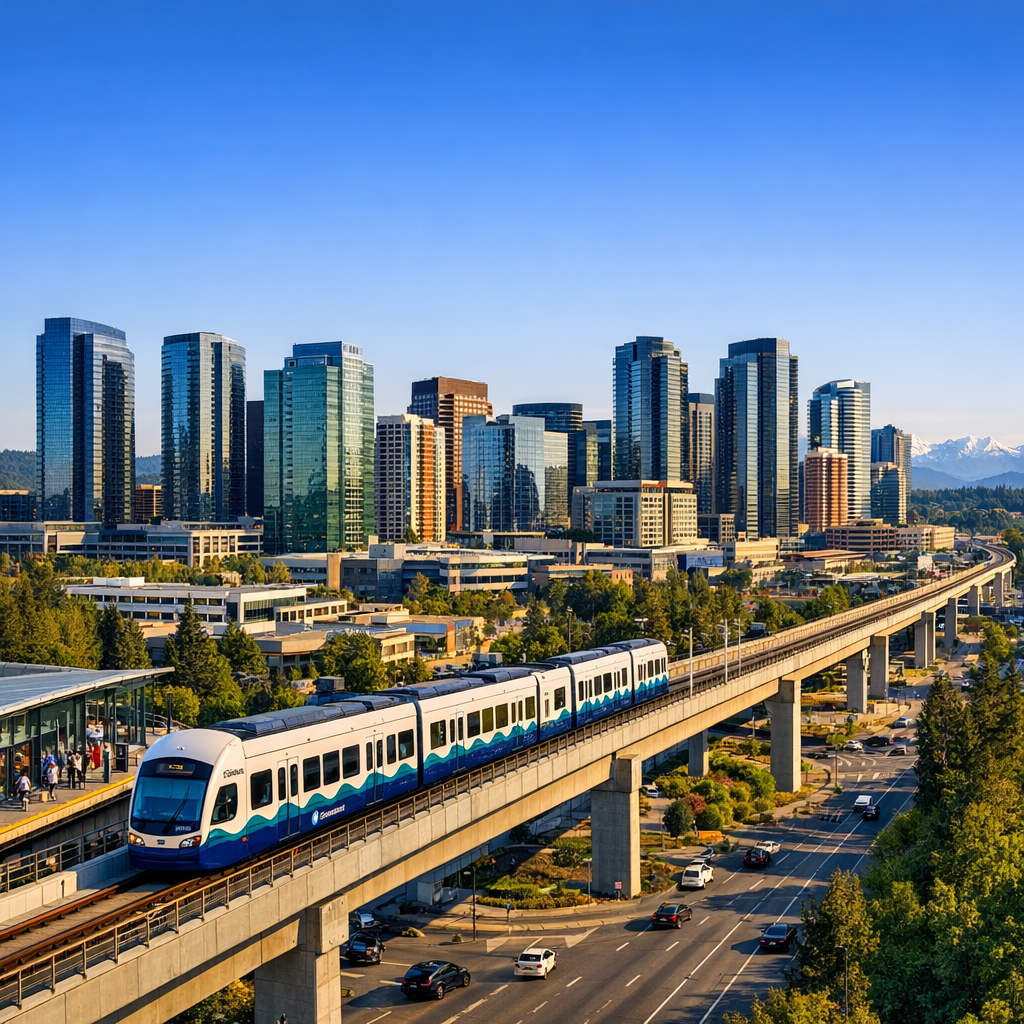
Bellevue, Washington, has solidified its position as a dynamic economic hub in the Pacific Northwest. This article provides an in-depth look at the city’s economic growth, employment trends, housing market, and infrastructure developments.
Economic Growth and Employment Trends
With over 150,000 jobs, Bellevue stands as the second-largest city in Washington State in terms of employment. Since 2000, the city has experienced an average annual job growth rate of 1.12%. Projections indicate that by 2035, employment figures could reach 192,800, underscoring Bellevue’s role as a regional employment center. Workers commute from across the Puget Sound region, with approximately 22% residing within the city, 15% from Seattle, and 20% from other Eastside cities, including Renton.
Housing Market Dynamics
The Bellevue housing market remains competitive. As of March 2026, the median sale price of a home was $1.5 million, reflecting a 6.7% decrease from the previous year. Homes typically receive multiple offers and sell within an average of eight days. The median sale price per square foot stands at $697, marking a 9.24% decline year-over-year. Despite these fluctuations, the market’s resilience is evident in the steady demand and quick turnover of properties.
Infrastructure and Transportation Developments
Enhancements in transportation infrastructure have significantly contributed to Bellevue’s economic vitality. The introduction of the Sound Transit 2 Line has bolstered connectivity, with the light rail service between Seattle and Bellevue commencing on March 28, 2026. This development facilitates seamless travel across Lake Washington, linking Bellevue to Seattle’s Chinatown-International District station and extending connections from Redmond to Lynnwood. Trains operate every eight minutes during peak periods and every 10-15 minutes at other times, offering residents and workers efficient transit options.
Tourism and Cultural Growth
Bellevue’s appeal extends beyond its economic and infrastructural strengths. The city has emerged as a vibrant destination, attracting 2.2 million overnight visitors in 2024 and generating $1.9 billion in economic impact. This growth is attributed to new hotels, enhanced transportation options, and a burgeoning culinary scene with over 80 new restaurants. Events like Bellevue Fashion Week further highlight the city’s cultural dynamism, showcasing local talent and fostering community engagement.
Conclusion
Bellevue’s economic landscape is characterized by robust growth, strategic infrastructure investments, and a thriving cultural scene. As the city continues to evolve, it remains a beacon of opportunity and innovation in the Pacific Northwest.