

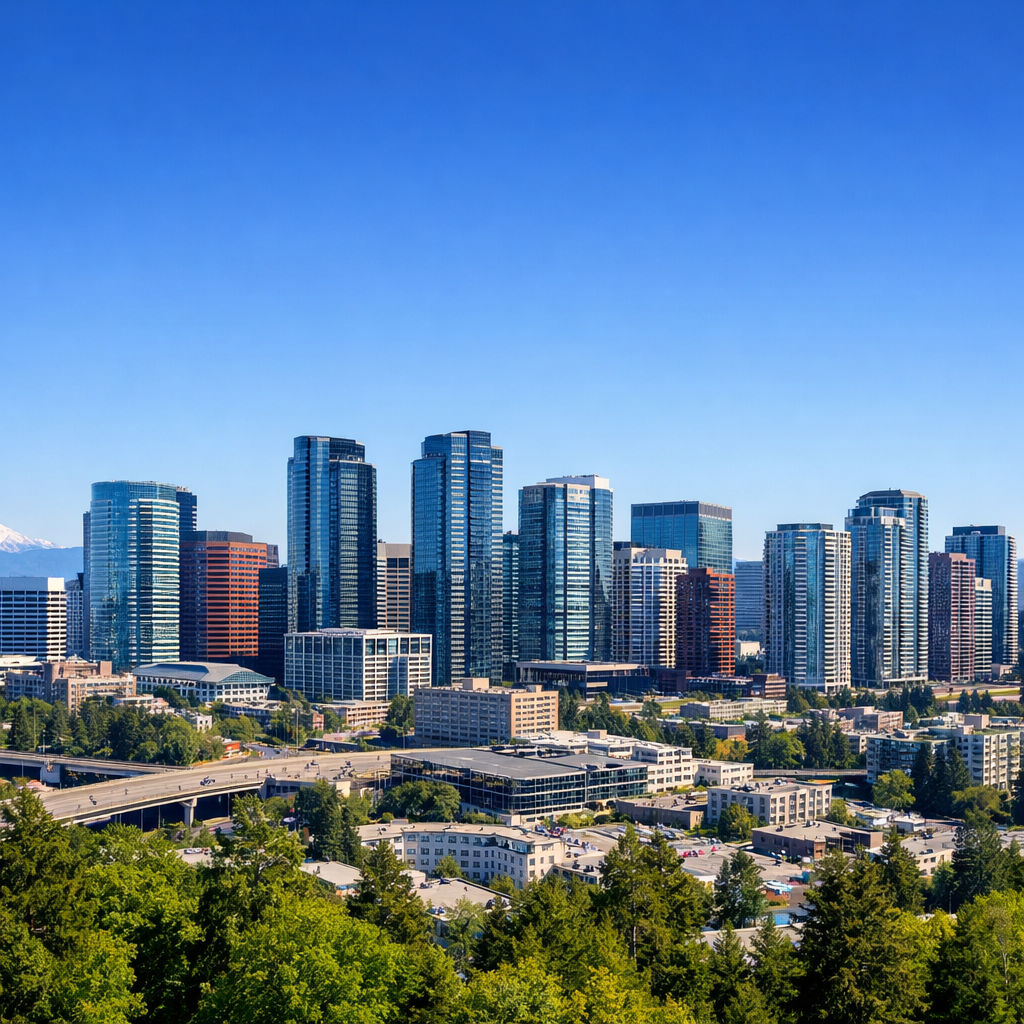
Bellevue, Washington, continues to solidify its position as a dynamic economic hub in the Pacific Northwest. This article provides an overview of the city’s economic growth, employment trends, housing market, and upcoming infrastructure developments.
Economic Growth and Employment Trends
With over 150,000 jobs, Bellevue stands as the second-largest city in Washington State in terms of employment. Since 2000, the city has experienced an average annual job growth rate of 1.12%, with projections estimating employment to reach 192,800 by 2035. This growth underscores Bellevue’s role as a regional employment center, attracting workers from across the Puget Sound region.
In 2025, Bellevue’s visitor economy significantly contributed to the local economic ecosystem, supporting approximately 14,000 hospitality industry jobs and generating $142 million in state and local taxes. This highlights the importance of tourism in bolstering the city’s economic stability.
Housing Market Dynamics
The Bellevue housing market remains highly competitive. As of March 2026, the median sale price of a home was $1.5 million, reflecting a 6.7% decrease compared to the previous year. Homes typically receive multiple offers and sell in approximately eight days, indicating sustained demand despite price adjustments.
Infrastructure Developments
Significant infrastructure projects are underway to enhance connectivity and support economic growth. Notably, Sound Transit’s light rail connection between Seattle and Bellevue is set to commence service on March 28, 2026. This development is expected to facilitate smoother commutes and bolster business activities between the two cities.
Additionally, the city is addressing housing needs through redevelopment projects. The former site of an unfinished hotel at 995 118th Ave. S.E. is being transformed into 146 affordable housing units, demonstrating Bellevue’s commitment to providing diverse housing options for its residents.
Conclusion
Bellevue’s economic landscape is characterized by steady growth, a competitive housing market, and strategic infrastructure developments. These factors collectively contribute to the city’s vibrant economy and its appeal as a place to live and work.