

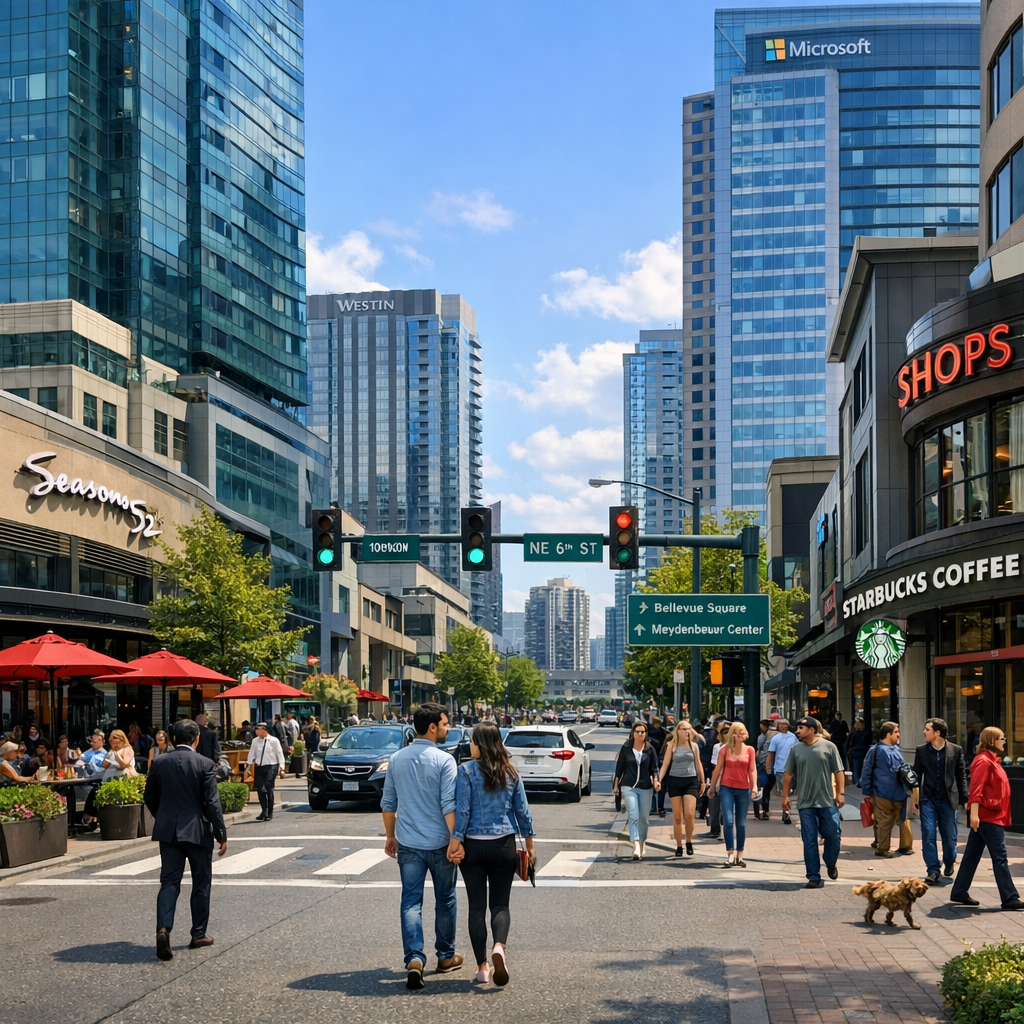
Bellevue, Washington, has experienced significant economic growth in recent years, solidifying its position as a dynamic hub in the Pacific Northwest. This article explores the city’s economic expansion, housing market trends, and upcoming infrastructure developments.
Economic Growth and Employment
As of 2025, Bellevue boasts over 162,000 jobs, reflecting its status as a major employment center in Washington State. The city continues to attract new businesses, with 1,400 establishments opening their doors in the past year alone. This growth underscores Bellevue’s appeal to entrepreneurs and established companies alike.
Housing Market Trends
The housing market in Bellevue remains competitive. In March 2026, the median sale price of a home was $1.5 million, a 6.7% decrease compared to the previous year. Homes typically sell within eight days, indicating strong demand despite the price adjustment. The average rent in Bellevue stands at $2,688, slightly above the national average, reflecting the city’s desirability and economic vitality.
Infrastructure Developments
Significant infrastructure projects are underway to support Bellevue’s growth. Notably, Sound Transit’s light rail service between Seattle and Bellevue is set to commence on March 28, 2026. This development will enhance connectivity across Lake Washington, facilitating easier commutes and potentially boosting local businesses by increasing accessibility.
Tourism and Cultural Events
Bellevue’s tourism sector is also thriving. In 2024, the city welcomed 2.2 million overnight visitors, generating $1.9 billion in economic impact. Events like Bellevue Fashion Week continue to draw attention, showcasing local talent and contributing to the city’s cultural vibrancy.
Conclusion
Bellevue’s economic landscape is characterized by robust growth, a dynamic housing market, and strategic infrastructure developments. As the city continues to evolve, it presents numerous opportunities for businesses, residents, and visitors alike.