

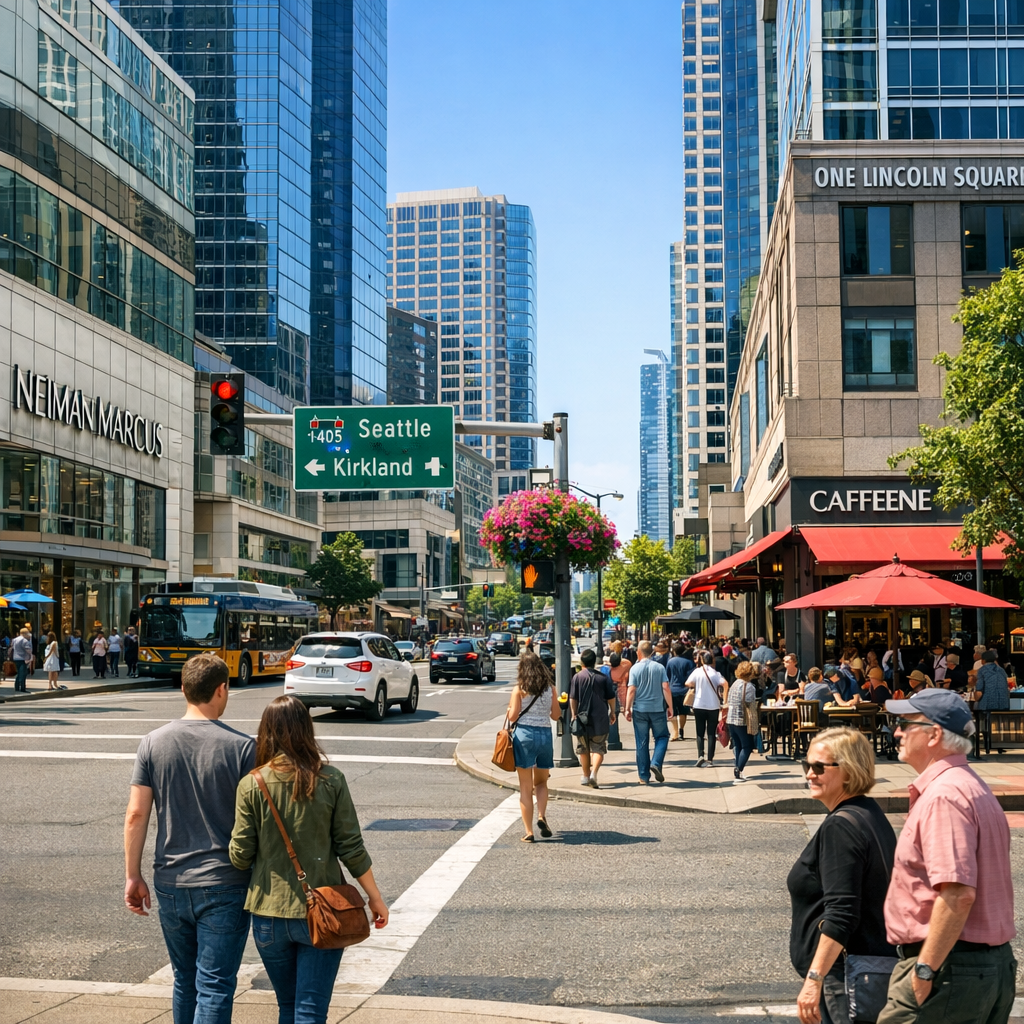
Bellevue, Washington, continues to solidify its position as a dynamic economic hub in the Pacific Northwest. With a population of approximately 154,486 residents, the city has experienced steady growth, reflecting its appeal as a place to live and work.
Economic Growth and Employment
The city’s employment landscape is robust, boasting over 162,000 jobs. In 2025 alone, Bellevue welcomed 1,400 new businesses, underscoring its attractiveness to entrepreneurs and established companies alike. This growth aligns with the city’s strategic efforts to foster a competitive business environment and support economic prosperity.
Housing Market Trends
The housing market in Bellevue remains competitive. As of March 2026, the median sale price of a home was $1.5 million, marking a 6.7% decrease from the previous year. Homes typically sell after an average of eight days on the market, indicating sustained demand despite the price adjustment. The median sale price per square foot stands at $697, reflecting the city’s premium real estate market.
Infrastructure Developments
Significant infrastructure projects are set to enhance Bellevue’s connectivity and support its economic growth. Notably, Sound Transit’s Line 2 light rail service is scheduled to commence on March 28, 2026. This new line will connect Bellevue to Seattle’s Chinatown-International District station, providing a vital link across Lake Washington and facilitating easier commutes for residents and workers.
Tourism and Community Engagement
Tourism continues to play a pivotal role in Bellevue’s economy. In 2025, visitor spending supported approximately 14,000 hospitality industry jobs and generated $142 million in state and local taxes. Events like Bellevue Fashion Week not only showcase local talent but also contribute to the city’s cultural vibrancy and economic vitality.
As Bellevue navigates its path forward, the city remains committed to balancing growth with quality of life, ensuring that economic development benefits all members of the community.