

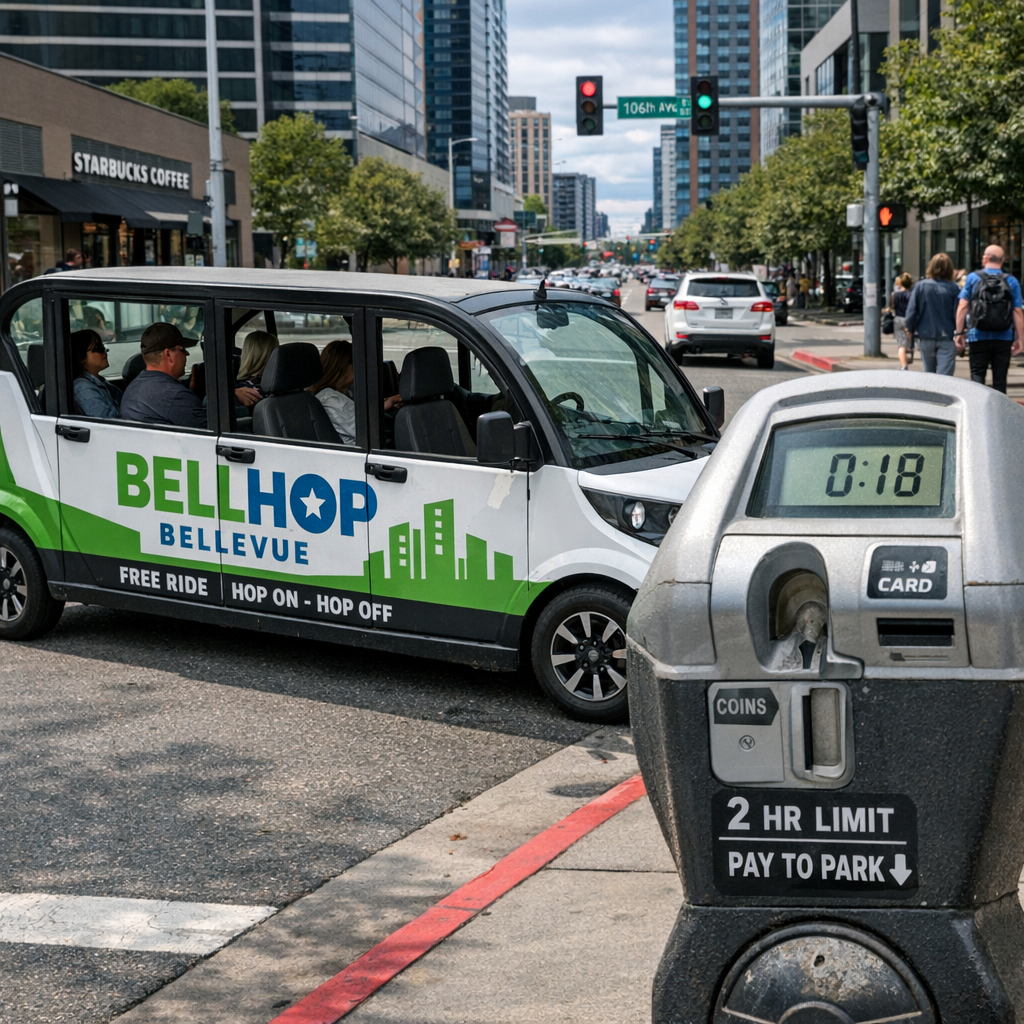
Bellevue is undergoing significant changes in its transportation infrastructure, aiming to enhance urban mobility and sustainability. Two notable developments are the introduction of a paid street parking program and the expansion of the BellHop shuttle service.
Introduction of Paid Street Parking
In May 2026, the Bellevue City Council approved an ordinance to implement a paid street parking program in the city’s densest neighborhoods, including Downtown, Wilburton, BelRed, and the Spring District. This decision marks a shift from the longstanding policy of free street parking.
The program will utilize a dynamic, demand-based pricing model, with hourly rates ranging from $1 to $8. The city’s transportation department aims to maintain an on-street occupancy rate of 80%, ensuring approximately 1–2 open parking spaces per city block. Revenue generated will fund installation, equipment maintenance, parking enforcement, and future transportation studies. Additionally, there are plans to expand the BellHop shuttle service using these funds.
While the city views this initiative as a step toward better traffic management and sustainability, some local businesses have expressed concerns. The Bellevue Collection, a major commercial property operator, stated, “Offering free parking for our retail, dining, and entertainment customers at The Bellevue Collection has always been foundational to our core values.” They have committed to maintaining free parking for their retail guests despite the city’s new program.
Expansion of the BellHop Shuttle Service
Complementing the paid parking initiative, Bellevue has expanded its free electric shuttle service, BellHop. In March 2025, three new Kia EV9 electric vehicles were added to the fleet, making it one of the first programs in the nation to integrate these advanced vehicles into public transportation.
The new vehicles offer several advantages:
- Reduced charging time, increasing service hours and reaching more riders.
- Climate control for a comfortable ride in all seasons.
- Faster travel speeds, improving response times for efficient pick-ups.
Since its inception in August 2023, BellHop has provided over 134,000 rides, covered more than 113,407 miles, and prevented 59.46 metric tons of greenhouse gas emissions. The expansion aligns with Bellevue’s commitment to innovative, sustainable mobility solutions for the community.
Mayor Lynne Robinson highlighted the significance of this development, stating, “The use of the new KIA EV9 vehicles and the ability to offer faster service to the community benefits the entire city. By reducing greenhouse gas emissions with electric vehicles that provide accessible, sustainable options, it touches many Bellevue priorities.”
Looking Ahead
As Bellevue continues to evolve, these transportation initiatives reflect the city’s dedication to balancing growth with sustainability. The introduction of paid street parking aims to manage urban congestion, while the expansion of the BellHop shuttle service offers residents and visitors a free, eco-friendly alternative for navigating the city. These efforts underscore Bellevue’s proactive approach to addressing the challenges of urban mobility in a rapidly growing community.