

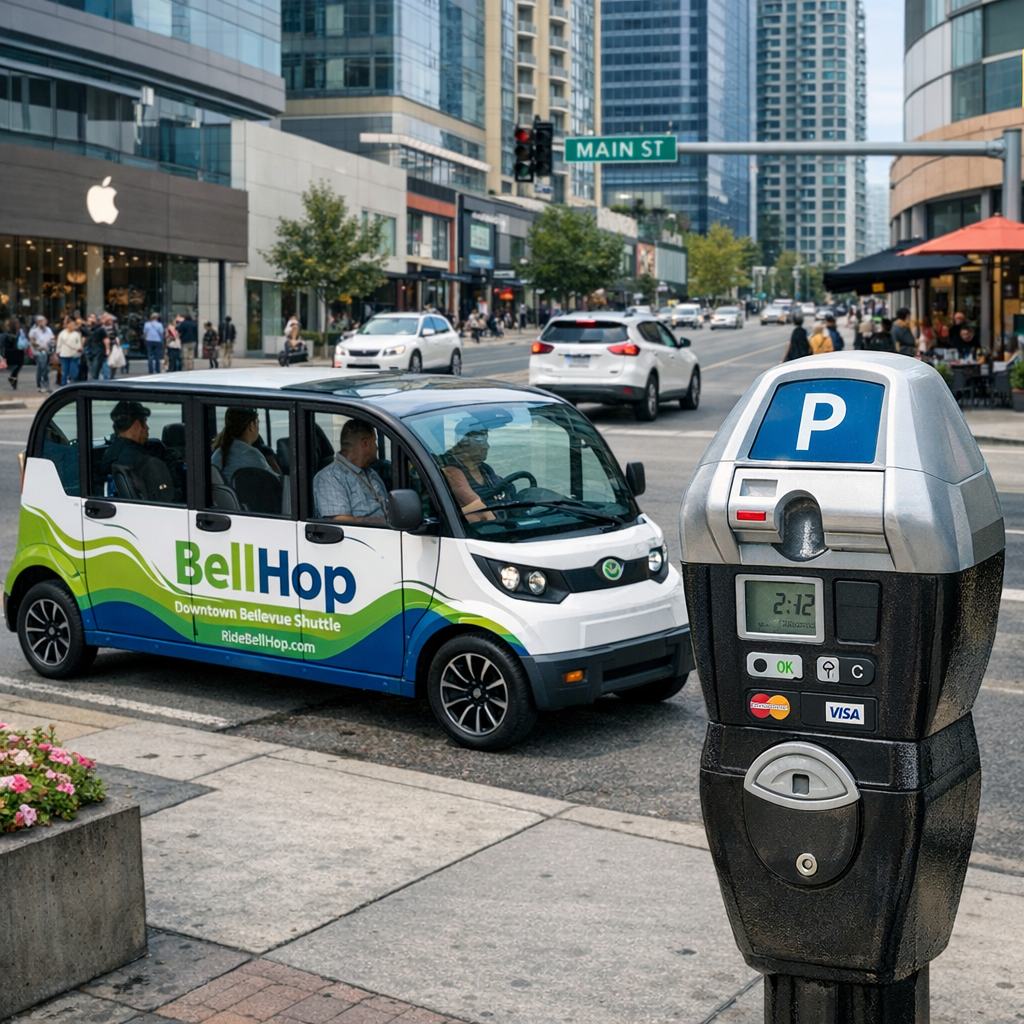
Bellevue is undergoing significant changes in its transportation infrastructure to address urban mobility challenges and enhance commuter experiences.
Introduction of Paid Street Parking
The Bellevue City Council has approved an ordinance to implement a paid “curb pricing program” in the city’s densest neighborhoods, including Downtown, Wilburton, BelRed, and the Spring District. This dynamic, demand-based pricing model will feature hourly rates ranging from $1 to $8, aiming to maintain an on-street occupancy rate of 80%, or about 1–2 open parking spaces per city block. The initiative seeks to alleviate traffic congestion caused by limited parking availability and to reduce instances of drivers overstaying posted time limits. Revenue generated from the program will be reinvested into transportation infrastructure, including the expansion of the BellHop shuttle service.
Expansion of BellHop Shuttle Service
In a move towards sustainable urban mobility, Bellevue’s free electric shuttle service, BellHop, has expanded its fleet by adding three new Kia EV9 vehicles. This upgrade enhances service efficiency with reduced charging times, improved climate control, and faster travel speeds. Since its inception in August 2023, BellHop has provided over 134,000 rides, covered more than 113,407 miles, and prevented 59.46 metric tons of greenhouse gas emissions. The expansion underscores the city’s commitment to providing accessible and eco-friendly transportation options for residents and visitors alike.
Community Perspectives
While these developments aim to improve urban mobility, they have elicited mixed reactions from the community. Some local businesses have expressed concerns about the potential impact of paid street parking on customer accessibility. The Bellevue Collection, a major commercial property operator, has stated its commitment to maintaining free parking for its retail guests, emphasizing the importance of accessible parking for customer satisfaction. Conversely, city officials highlight the benefits of reduced traffic congestion and enhanced public transportation options as key drivers for these initiatives.
As Bellevue continues to evolve, these transportation enhancements reflect the city’s proactive approach to addressing urban mobility challenges and its dedication to sustainable development.