

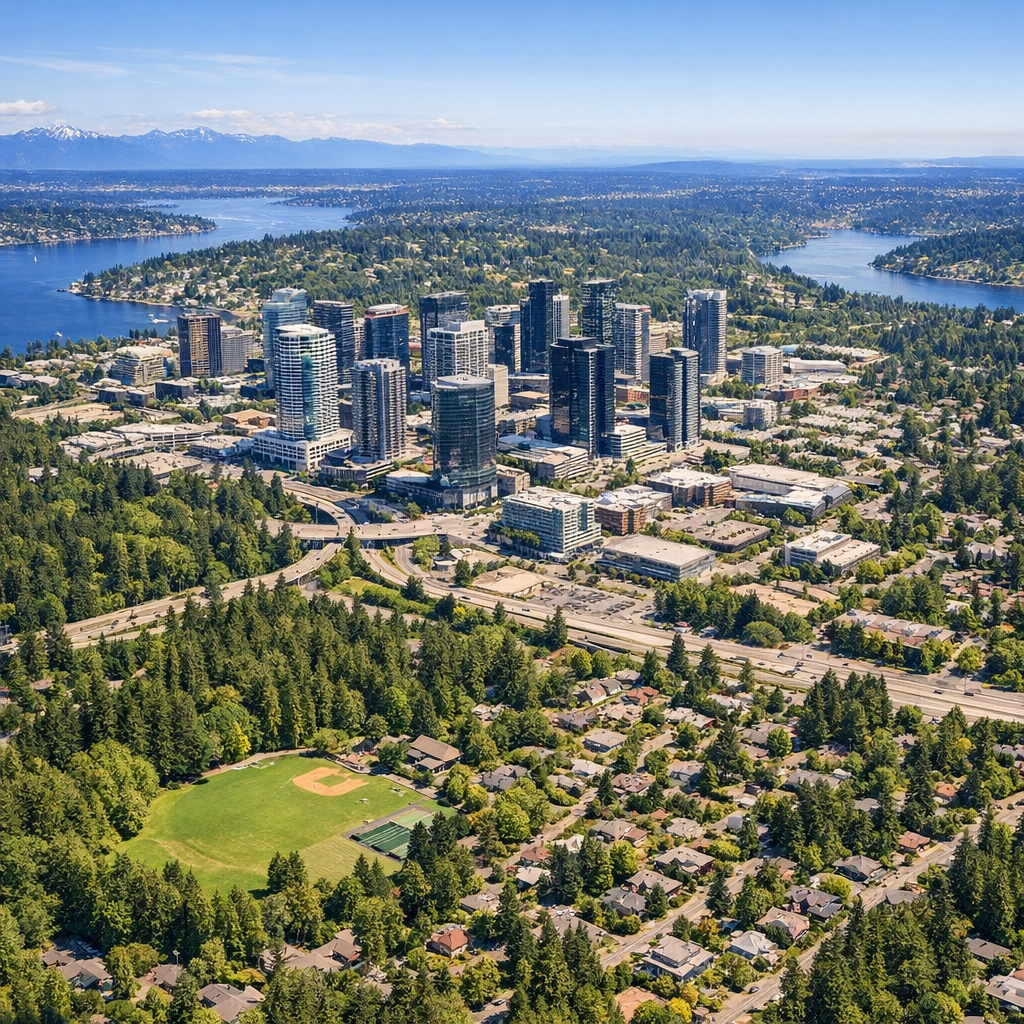
Bellevue continues to make significant strides in environmental sustainability, guided by the 2026–2030 Sustainable Bellevue Plan. This comprehensive strategy focuses on reducing greenhouse gas emissions, enhancing energy efficiency, and fostering community resilience to climate change.
Progress in Emission Reductions
Recent data indicates a 4.6% decrease in greenhouse gas emissions from 2023 to 2024. This reduction is attributed to decreased energy consumption, a shift towards cleaner transportation options, and increased reliance on renewable energy sources. Since 2011, municipal emissions have dropped by 52%, showcasing the city’s dedication to its environmental objectives.
Tree Canopy Assessment
The latest tree canopy assessment reveals a slight decline from 39.6% in 2021 to 39.3% in 2023, equating to a loss of approximately 70 acres of tree cover citywide. Notably, tree canopy within city parks increased by 38 acres, highlighting efforts to preserve and expand green spaces amidst urban development.
Community Engagement and Initiatives
Bellevue actively involves residents in its sustainability efforts through programs like the Bellevue Climate Challenge, which encourages individuals to reduce their carbon footprint. Additionally, the city offers incentives for energy-efficient building practices and supports the adoption of electric vehicles, aligning with its goal of achieving carbon neutrality by 2050.
Looking Ahead
As Bellevue progresses with its Sustainable Bellevue Plan, the city remains committed to implementing high-impact strategies across key focus areas, including climate change mitigation, energy and building efficiency, sustainable mobility, waste management, and the preservation of natural systems. Through collaborative efforts and continuous monitoring, Bellevue aims to create a resilient and environmentally responsible community for future generations.