

By Evelyn Parker
Current Market Snapshot
Bellevue’s housing market has eased from the frenetic pace of earlier years but remains robust. The median home price has dipped slightly to about $1,572,500, down around 1.6% year-over-year. With roughly 600 active listings available and about 4.4 months of inventory, the market is settling into balance between buyers and sellers. Homes typically spend around 27 days on the market, and the sale-to-list price ratio is near 97.4%, indicating that many sellers are adjusting expectations.
The rental market has also softened somewhat. The average rent across Bellevue hovers near $3,000 for all unit types, marking a drop of about $249 compared to the previous year. While this is still substantially above national averages, tighter demand and greater supply are easing pressure.
What’s Driving These Patterns
More Inventory, More Options
Homes for sale in Bellevue have increased meaningfully—both in raw listings and in length of time on market. With more homes available, buyers are no longer forced into bidding wars like last year. Sellers aiming to move their property may need to price more competitively or be willing to negotiate.
Policy Shifts and Development Tools
The city of Bellevue has adopted several policy changes to boost housing diversity and affordability. Notable among them are updates to land use codes that encourage multi-unit housing (duplexes, triplexes, quadplexes) and accessory dwelling units (ADUs), as well as density bonuses in mixed-use areas. These moves aim to open up more housing types across different income levels.
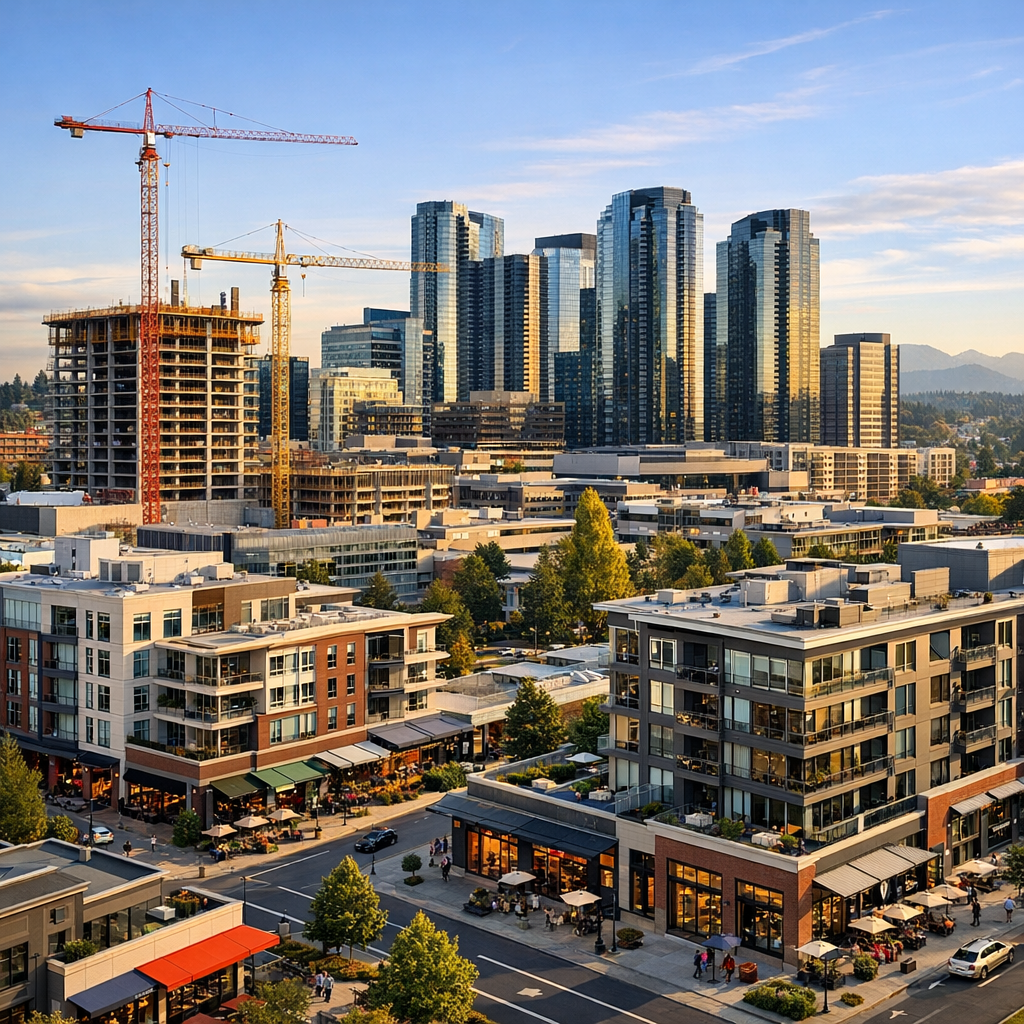
Also in motion are large scale development clusters. The BelRed neighborhood currently leads in residential project activity, with dozens of major projects underway; the largest single project there recently planned delivers over 600 units.
Opportunities and Challenges
For Buyers
If you’re looking to buy, this could be a good time to start exploring. Slower price gains, more homes on market, and longer decision windows give room to negotiate. That said, the price point for many homes remains high, especially in premium neighborhoods. Prospective buyers should define priorities: schools? commute? long-term value?
For Renters
Rents aren’t yet coming down dramatically, but relief is real. A softer rental market means that landlords may offer more flexible terms or concessions. Still, demand remains strong for well-located units, especially near transit or jobs.
For Developers and Policymakers
The city’s affordable housing strategy for 2026-2032 highlights the importance of partnerships, mixed funding, and development around transit nodes. Local contributions to many projects remain modest in scale (~5%), meaning external funding or incentives are critical. Zoning and land use Code Amendments are being retooled to lower barriers for new housing types; the upcoming Comprehensive Plan updates will shape how density and mixed uses get incorporated.
Looking Ahead
For the months ahead, expect continued balance in the market. Home prices may fluctuate modestly, depending on interest rates and buyer sentiment. Rental rates may see small adjustments in either direction, especially if more units come online. On the policy side, implementation of land use changes and approval pipelines will be worth watching—for they will influence how affordable and varied Bellevue housing becomes in future years.
Whether you’re buying, renting, or building—or all three—Bellevue is entering a moment of steady transition. Those equipped with research, patience, and clarity about what they value will be best positioned.