

By Olivia Adams
Overview of Vision Zero in Bellevue
Bellevue has committed to its Vision Zero initiative, an effort to eliminate traffic deaths and serious injuries on city streets by 2030. The City adopted the Safe System approach to make this goal achievable. It emphasizes safe people, safe streets, safe speeds, and safe vehicles—aligned with leadership, culture, partnerships, and data. Staff from several city departments coordinate the effort, with annual action plans and tracking tools including an interactive collision dashboard used for monitoring progress.
Recent Safety Wins
Some of the key recent advances include:
- The construction of more than 12,000 feet of new sidewalks across Bellevue.
- Adoption of a 20-mph speed limit on local residential streets to help reduce collision severity.
- Securing over $15 million in state and federal grants to fund safe transportation projects.
- Deployment of new traffic signal technologies and automated speed enforcement in targeted high-injury areas.
Where More Work Is Needed
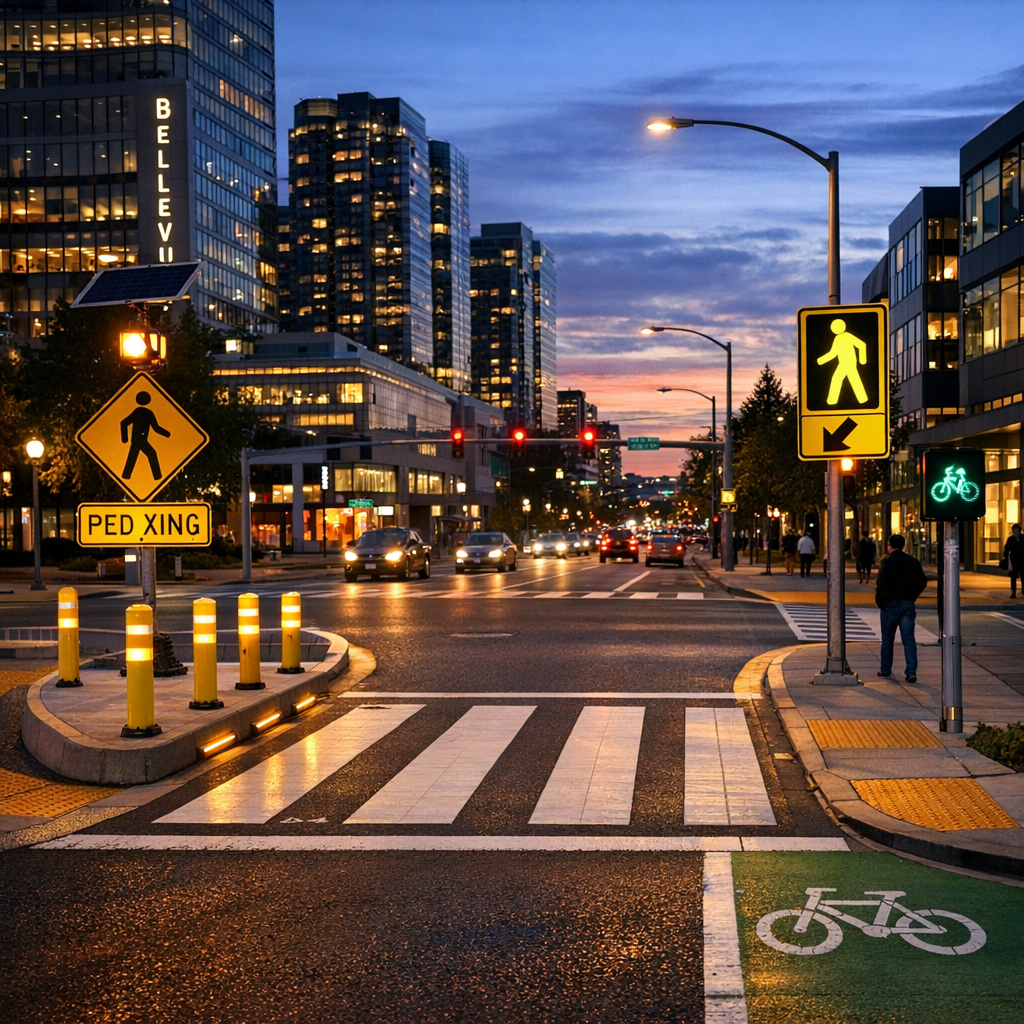
Even with recent successes, Bellevue still faces challenges. A majority of severe and fatal crashes happen on just a small portion of city streets—known as the High Injury Network. The city has identified High Injury Intersections where most collision risks for all road users occur. Walking audits and infrastructure redesigns are still being planned to address unsafe crossings and gaps in the sidewalk network, particularly for people walking, biking, or rolling.
Community Role and Next Steps
Community input has been central to shaping the Vision Zero work. Bellevue invites residents to take part in walking audits to observe issues firsthand and report designs that feel unsafe. The city also partners with advocacy coalitions like SAFE Bellevue, which emphasizes safer neighborhood streets, safe routes to school, and infrastructure that supports people walking, biking, rolling, or taking transit.
Going forward, residents can expect:
- More temporary or “rapid-build” safety projects that test design changes before committing to permanent infrastructure.
- Expanded public outreach to set priorities for walking, biking, and school route improvements.
- Increased funding directed to neighborhoods identified as having concentrated risk.
- Ongoing data transparency through dashboards and reports to keep the community informed.
How You Can Engage
Want to pitch in? You can:
- Check Bellevue’s city website for upcoming walking audits in your area and share feedback on what feels unsafe in your daily commute.
- Join or help shape local advocacy groups working on street safety or active transportation issues.
- Support city budget proposals that prioritize neighborhood safety and complete street improvements.
As Bellevue grows, taking proactive steps toward safer streets will affect not just traffic outcomes—but how safe our parks, school routes, and walkable neighborhoods feel every day. Vision Zero isn’t just a project: it’s a promise residents can help shape.