

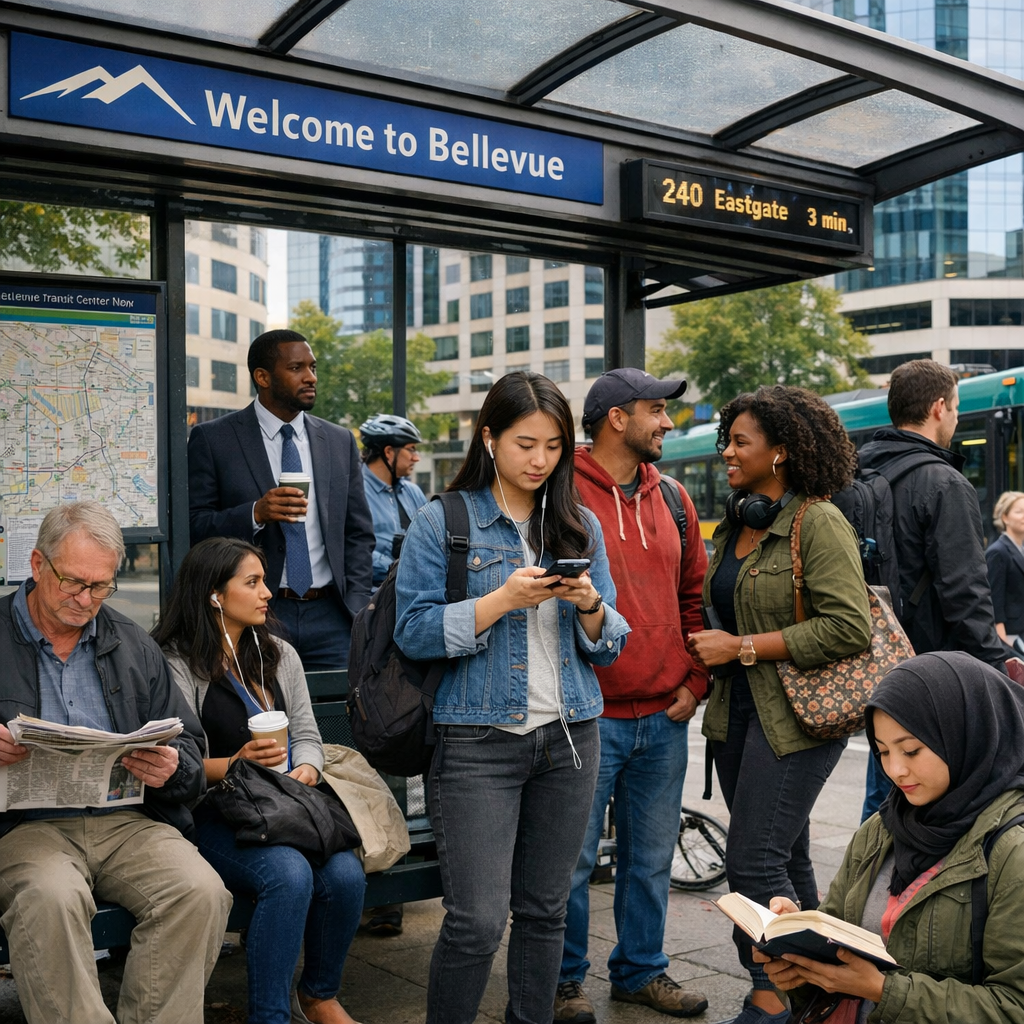
My name is Mia Cooper, and I’ve lived in Bellevue for over a decade, commuting, raising kids, and watching our city grow larger—and more complex. Recently, I’ve been thinking a lot about transportation: who has access, and who’s being left behind.
The Changing Transit Landscape
Bellevue is shifting fast. Light rail is taking shape, major streets are being redesigned, and several bus routes are being reduced or canceled. Most notable is Route 550, a bus service that ended in late August 2026. Its discontinuation was tied to light rail expansion, with Route 556 enhanced to fill part of the gap. But for many, this doesn’t solve all the problems—especially not for folks who depended on 550 for more direct or accessible connections. Communities that aren’t adjacent to rail stations are feeling these impacts most acutely. Sound Transit confirmed that the 550 ended service August 29, 2026, and that 556 took over enhanced service on the same date.
Everyday Frustrations and Fears
During rush hour on Route 560, crowds spill onto the sidewalks. Luggage, strollers, umbrellas—all struggle to move through aisles. Rear-door boarding has become common, especially when buses are packed and front entrances are blocked. Riders report feeling uncertain about fare compliance and safety. One local described the process as “a serious safety hazard” during early morning commutes and pointed out that overcrowding and inefficient transfers make travel unpredictable.
Equity, Accessibility, and the Missed Connections
Light rail offers speed and potential—but only if people can reach its stations. For many Bellevue residents, that “last mile” problem still has no good solution. Elevators at major transfer points (like ID/Chinatown), unreliable bus stops near homes, and a lack of infrastructure for those with mobility needs exacerbate the gap. Add to that the neighborhoods that have lost connections—notably zones the 550 used to serve—and the concern becomes not just convenience but whether transit planning is truly fair.
What Bellevue Could Do Better
- Prioritize frequent and reliable service on key corridors to reduce crowding, improve schedule predictability, and ensure that routes serving less-central neighborhoods remain viable.
- Make station access smoother and safer with well-maintained elevators, clear signage, and safe walkable routes—especially for seniors, people with disabilities, and those carrying baggage.
- Engage neighborhoods hard hit by service reductions in planning discussions—not just through surveys, but through local meetings where trade-offs are clearly explained and feedback actually shapes outcomes.
- Provide fair transitions—ensure that when one route ends, replacement options are accessible for real, not just in theory, especially during off-peak hours.
Why It Matters
Transportation isn’t just about moving people—it’s about connecting lives. It determines whether you can get to work on time, whether a parent can make it to evening classes, or whether someone must curtail medical care or social connections. For Bellevue to truly grow inclusively, transit must serve every neighborhood, every stage of life.
My hope is that as we build new systems—light rail, shuttle networks, walking paths—we don’t measure progress only in flashy projects. We measure it in whether they make life easier for all of us: the early riser on Route 560, the student commuting to South Bellevue, the elder who needs the elevator, the family that can’t afford parking fees, the resident who depends on that last close bus stop. That’s the Bellevue we need to build.