

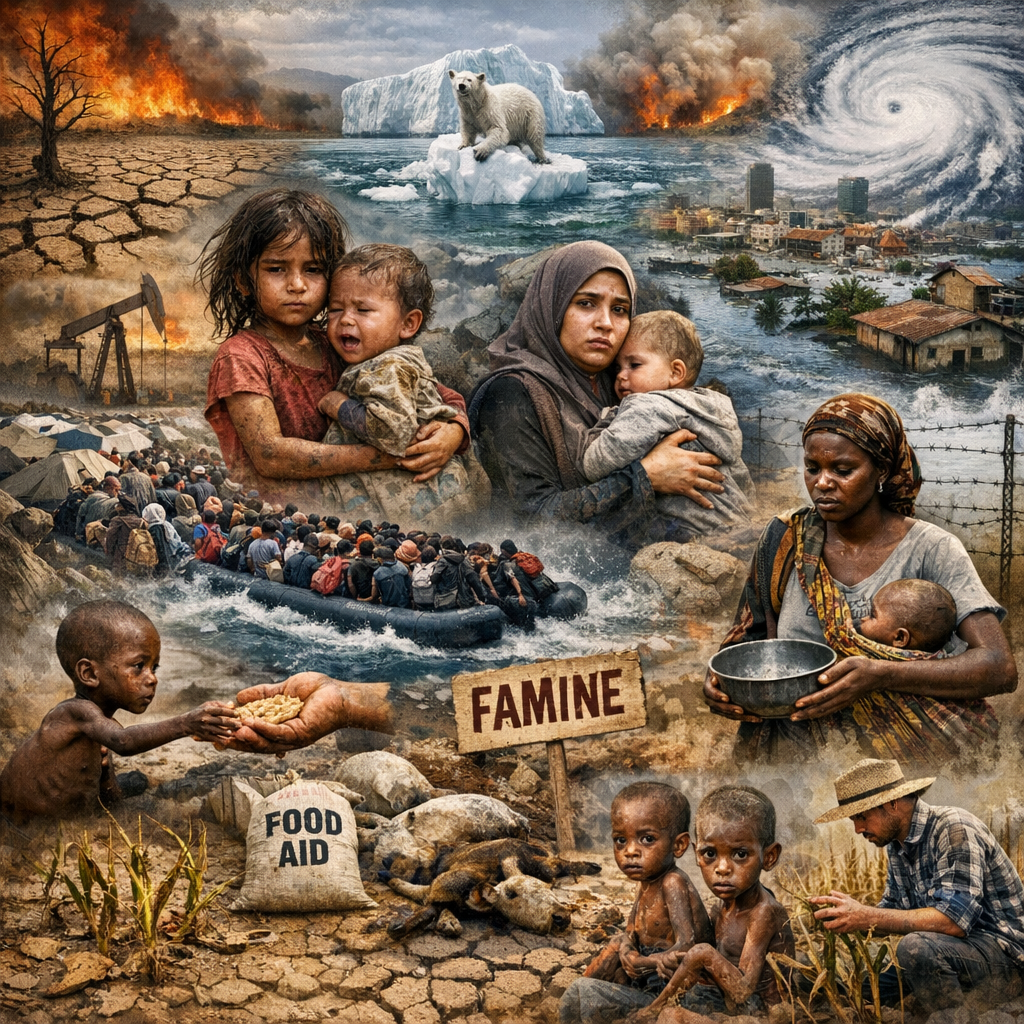
By Ava Washington — The world is facing several long-term global trends that go beyond headlines. As conflicts persist, climate pressures grow, and economies strain, these forces are increasingly intertwined. Here’s a look at what international reports are revealing and what that could mean for communities everywhere—including ours.
Hunger and the Rising Cost of Healthy Diets
Recent reports from the United Nations system underline that global food insecurity remains fragile. Even as number of people going hungry has eased slightly, progress is slow and uneven. Some key drivers backing up this vulnerability:
- Healthy diets are becoming increasingly unaffordable—in many regions, individuals can’t access or afford minimally nutritious food, particularly in parts of Africa.
- Supply chain issues, inflation in food and fertilizer prices, and weather extremes are all contributing to volatility in food production and costs.
- Despite recent harvest gains, factors like conflict and economic disruption are undermining stability and risking future shortages.
Climate Shift: Crossing Thresholds and What It Means
Scientific indicators show the pace of climate change is accelerating. Some findings to take seriously:
- The planet has warmed to around 1.37°C above pre-industrial levels, with models projecting passing the 1.5°C threshold in coming years if current emissions trends continue.
- Extreme heat, marine heatwaves, and shifting precipitation patterns are becoming more frequent and intense. Ocean and land heat records are eroding previously stable climate norms.
- These changes are not isolated—they exacerbate other global risks, such as food insecurity, displacement, and poverty.
Forced Displacement: Numbers Remain Alarmingly High
Conflict, persecution, and disasters continue driving millions to flee their homes. Key statistics and implications:
- By end-2025, nearly 118 million people worldwide were forcibly displaced due to violence, persecution, or other grave threats—refugees, internally displaced people, and asylum-seekers included.
- Of these, refugees alone numbered in the tens of millions; millions more are stateless or trapped in protracted displacement.
- Displacement places serious burdens on host countries and communities, affecting access to shelter, health care, education, and livelihoods—which in turn ripple back to global geopolitical and economic stability.
Where These Trends Meet
These challenges—food crises, climate change, displacement—don’t happen in silos. They amplify and interact:
- For example: Extreme weather and climate disruptions undermine crop production, which drives food price spikes, which fuel instability and migration.
- Date stresses and growing competition for resources may increase tension in vulnerable regions.
- Efforts to address one area—say, improving agricultural resilience—can also contribute to climate mitigation and reduce pressure on displacement pathways.
Looking Ahead: What Can Be Done Locally and Globally
Even for those of us far from conflict zones or farming frontiers, these are not distant problems. Here are actions being explored and opportunities to support sustainable change:
- Policies to reduce the cost of nutritious food, support climate-smart agriculture, and deliver safety nets for vulnerable populations.
- Investments in renewable energy, disaster risk reduction, and infrastructure that can withstand climate shocks.
- International cooperation to share responsibility for refugees, fairly distribute resources, and uphold human rights, including safe migration pathways.
- Grassroots and community initiatives—local food systems, conservation efforts, volunteer support for refugees—all matter.
These global developments are reminders that our interconnectedness is real. What we see on the news—hunger, climate disasters, human displacement—is often part of systems that span countries and continents. By understanding them, we’re better equipped to engage, advocate, and act in ways that build shared resilience.