

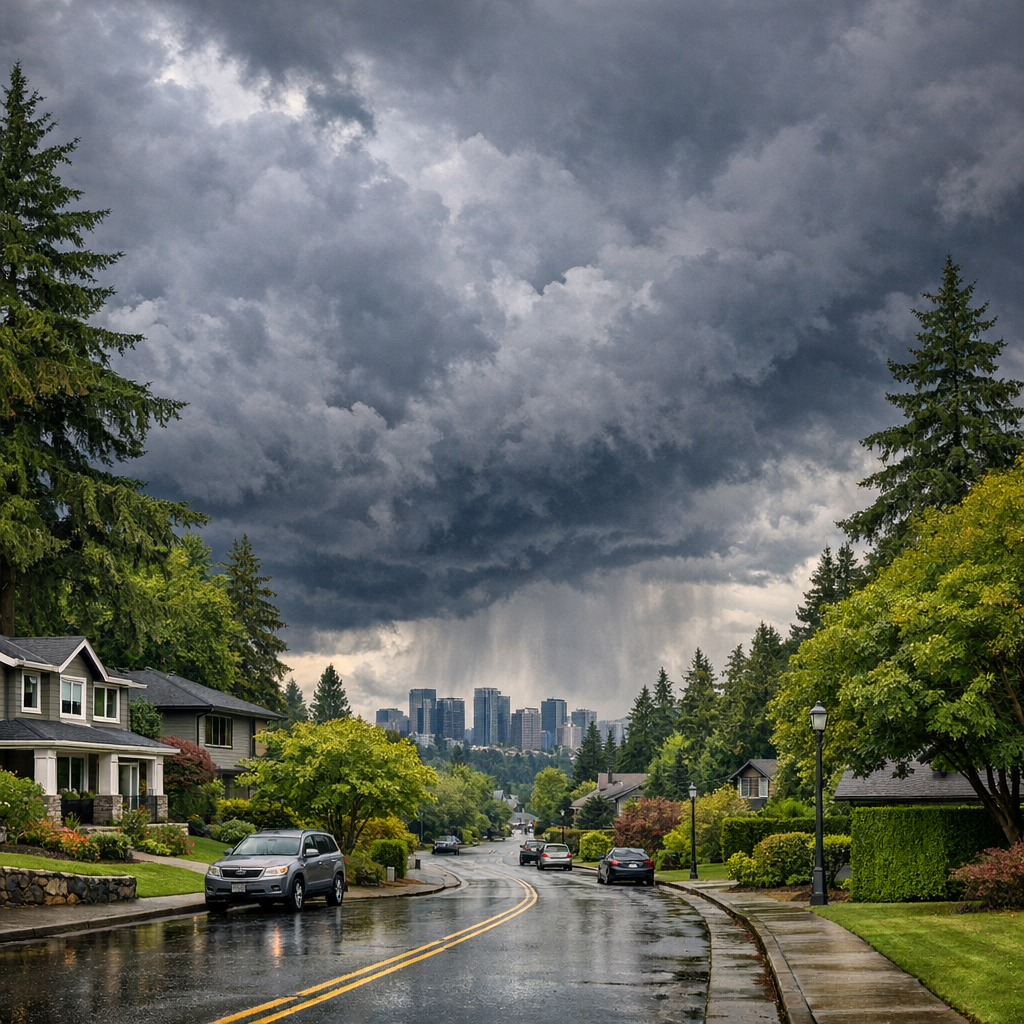
Bellevue’s weather trends are changing, and with those shifts come new challenges for our environment and community infrastructure. From higher summer temperatures to heavier winter precipitation, adapting to these shifts is now a priority.
Key Weather & Climate Trends
More Intense Precipitation & Storms
Bellevue is seeing heavier winter rains—ranging storms that bring more runoff, flooding in low-lying neighborhoods, and risks to roadways and infrastructure. Forecasts indicate the city could face a rise in both the frequency and severity of storms within the next few decades. Urban drainage systems, streambanks, and flood-prone areas are under increasing stress.
Heat Waves & Rising Temperatures
Days with highs above about 85°F are becoming more common. What used to be brief heat events are lasting longer, stressing both people and the built environment. Heat impacts areas with less shade most severely—often in denser suburban zones and areas with reduced tree cover.
Tree Canopy Changes
The city’s urban forest plays a huge role in cooling, clean air, and stormwater absorption. Recent assessments show a slight dip in tree canopy overall, primarily in suburban residential areas. Park and open space canopy saw gains. Bellevue aims to reach about 40% canopy coverage citywide.
Environmental Risks Intensifying
Aquatic Ecosystems & Watershed Stress
Streams, lakes, and wetlands that feed into Lake Washington and Lake Sammamish are under pressure. Flash flooding and rising stream temperatures threaten salmon and other habitat-sensitive species, especially in smaller creeks throughout Bellevue.
Utilities & Public Services Under Load
Intense winter storms risk damaging power lines and blocking roads, while extreme heat can compound emergency response challenges. Stormwater systems and wastewater infrastructure need upgrades to handle more frequent heavy downpours.
What Bellevue Is Doing
Sustainability Planning & Emissions Reduction
In November 2025 the Bellevue City Council adopted the 2026–2030 Sustainable Bellevue Plan. It maps out strategies to reduce GHG emissions 50% by 2030 (compared to 2011) and reach carbon neutrality by 2050. Goals include cleaner buildings, greener transportation, and better land-use planning.
Stormwater & Natural Systems Management
The city is applying new design standards for managing stormwater, promoting low-impact development, and maintaining drainage systems. It also supports efforts to restore healthy streams and wetlands to help soak up excess rain and support biodiversity.
Tree Canopy Expansion & Urban Heat Mitigation
Programs to protect and expand Bellevue’s tree canopy focus on neighborhoods with the greatest heat exposure. Trees help reduce peak summer temperatures, improve air quality, and buffer rainfall. Bellevue is accelerating urban forestry efforts, focusing on resilient species.
Actions You Can Take Locally
- Plant native trees and shrubs that thrive in Bellevue’s climate—these add shade and stabilize soil.
- Use permeable surfaces or rain gardens to reduce stormwater runoff.
- Check energy use—seal leaks, use efficient heating/cooling—to lower emissions and bills.
- Stay informed about heat advisories or storm warnings, and prepare emergency kits.
- Participate in local programs like the Bellevue Climate Challenge, tree planting events, or community sustainability workshops.
Bellevue is at a crossroads: with rising weather extremes and climate risks, the actions we take now will shape how livable this city remains. Together, from city leaders to residents, we can build resilience—ensuring Bellevue remains vibrant, safe, and green for years to come.