

By William Gray
A Thriving Ecosystem Built on Innovation and Appeal
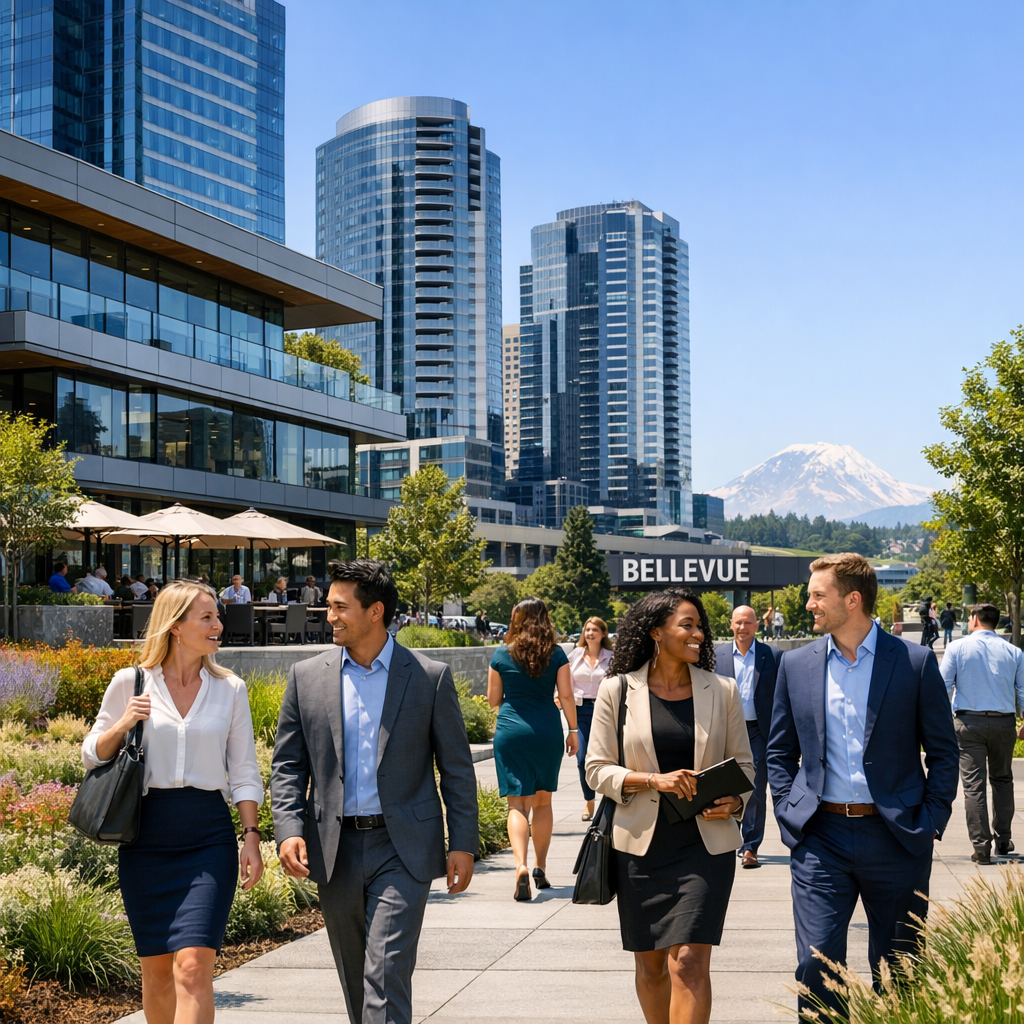
Bellevue is projecting itself as much more than a bedroom community of Seattle. With over 65 corporate headquarters and around 90 international firms based here, the city is attracting high-growth tech and innovation companies. Employers such as Amazon, Meta, OpenAI, TikTok, and Snowflake continue to choose Bellevue, drawn in part by its college-educated workforce and proximity to major markets. Bellevue offers access to exceptional regional amenities: a network of parks and trails, relatively cleaner urban environments, and transit connections that are growing stronger. These advantages often tip the scale for companies weighing where to locate or grow operations.
Shifting Office Avalanches and Rent Trends
After a period where remote work and changing preferences reduced demand, the downtown Bellevue office market is showing signs of life. Class A asking rents in the Bellevue Central Business District have nudged up around 2.6 % year over year, and net absorption of office space has recently turned positive. However, rising vacancy rates—exacerbated by newly delivered office property—highlight the need for tenants to reconsider how much space they really need. Older office pockets like Eastgate have struggled more than newer, modern buildings that can support hybrid or flexible configurations.
Small Businesses and Main Street Evolution
While large tech firms grab attention, Bellevue’s local business scene is undergoing its own transformation. Old Bellevue and other neighborhood commercial areas are becoming fertile ground for first-time entrepreneurs—restaurants, boutiques, wellness studios—who are blending digital tools with local familiarity. Events, workshops, and collaboration with the city make it easier for small business owners to get started, adapt, and grow. At the same time, affordability and regulatory burdens—permitting, taxes—remain among the top concerns for these entrepreneurs.
Housing, Infrastructure & Economic Equity
Growth is creating growing pains. As workplaces expand and office amenities increase, the high cost of housing is challenging workforce retention and local purchasing power. Bellevue leaders recognize that economic development depends not just on business attraction but also on enabling people of diverse income levels to live in the city. Investments are underway in housing—especially affordable and workforce housing—and transportation infrastructure, like upgraded transit corridors and light rail extensions, to support both equity and connectivity.
Navigating Uncertainty and Preparing for What’s Next
The city’s economic development plan for the coming years places emphasis on resilience. That means preparing for continued shifts—remote work habits, evolving tech-sector demands, global supply chain fluctuations, rising operating costs—and fostering dialogue between government, businesses, and residents. By aligning land use, infrastructure investment, and economic priorities, Bellevue hopes to sustain its innovation economy while keeping its neighborhoods vibrant.