

By William Gray
Bellevue is known for its high-profile tech firms, glass towers, and global connections—but beneath that skyline is a robust economy built on small businesses, diverse industry, and long-term strategies to help everyone rise.
An Economic Development Plan Built For Growth and Resilience
In 2026 Bellevue adopted a refreshed Economic Development Plan that pairs the city’s 2044 Comprehensive Plan with a focused vision: maintaining a diverse, resilient economy, supporting businesses of all sizes—especially those led by women, veterans, and minorities—and investing in workforce and entrepreneurship systems. It’s not just a roadmap—it’s a commitment to an inclusive, sustainable economy. The plan highlights small-business displacement, affordability, permitting, and regulation as crucial areas for improvement. Bellevue also wants to encourage scalable, high-growth companies to launch and stay here.
The Backbone: Small Businesses and Startups
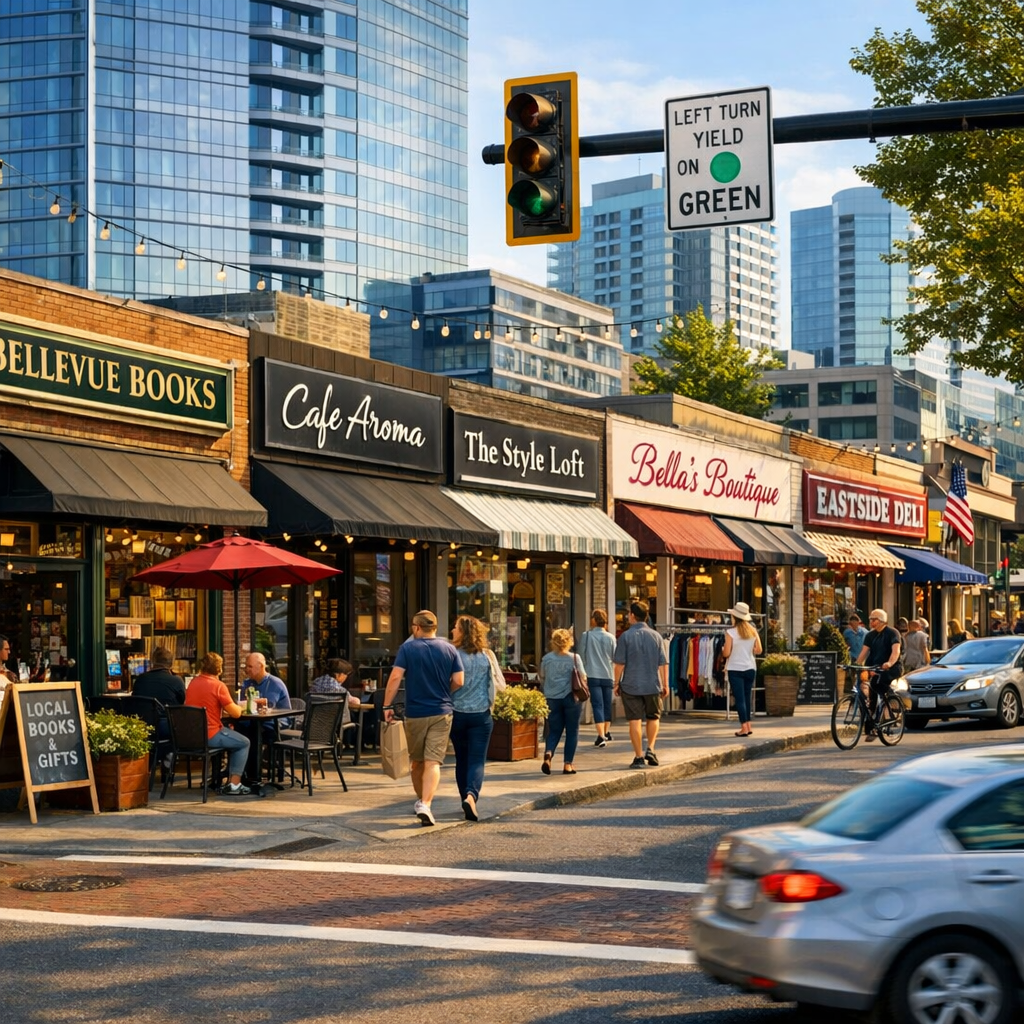
Bellevue comprises overwhelmingly small businesses—97 percent have fewer than 100 employees. These ventures provide much of the community’s character, especially in areas like Old Bellevue with its locally owned shops, cafés, creative spaces, and wellness-oriented services. To support them, Bellevue offers business assistance services, streamlines licensing and permitting, and fosters collaboration through programs like Startup 425 that connect founders with resources and peers.
Industry Clusters and Workforce Trends
Bellevue’s economic strength flows from a mix of industries. Its major clusters continue to include Information Technology, Business Services, Retail, and Tourism. IT remains the fastest-growing and most concentrated sector. Professionals and workers in science, management, and other high-skill fields make up a significant share of the city’s labor force, which is well educated and internationally diverse.
Tourism & Visitor Economy: A Shared Value
Tourism is an increasingly deliberate driver of local opportunity. In 2025, overnight visitors alone spent nearly $760 million in Bellevue, contributing to over 14,000 hospitality jobs and generating $142 million in state and local taxes. These numbers aren’t just about hotels and sightseeing—they ripple out into retail, food service, local events, and attractions. Plus, Bellevue’s Destination Development Plan seeks to balance growth with neighborhood livability.
Business Climate: Bellevue vs. Seattle
Comparisons with Seattle highlight Bellevue’s business-friendly policies. While Seattle has introduced higher business taxes and payroll or social housing taxes, Bellevue has kept its tax structure relatively stable—or even reduced some burdens—making it more attractive for businesses seeking alternatives. Office values in downtown Bellevue have risen in recent years, while vacancies have stayed lower than in many other regional urban cores.
Challenges & Next-Steps
- Affordability of commercial space, especially for small or growing businesses.
- Skilled worker recruitment and retention, particularly in high demand sectors.
- Transportation and infrastructure investments to support both quality of life and business logistics.
- Maintaining equity: ensuring that underserved communities have access to resources, capital, and opportunities.
Why It Matters Locally
For Bellevue residents, these economic efforts mean more than big-company expansions—they open the door to local entrepreneurship, better jobs, vibrant neighborhoods, and sustainable growth. By strengthening small business support, diversifying industry clusters, and keeping policy predictable, Bellevue is building an economy that’s both dynamic and livable—one where longstanding businesses and ambitious founders alike can thrive.