

By Evelyn Parker
Market Snapshot: Cooling in Prices, Stretching on Time
The Bellevue housing market is showing signs of easing. Home prices have dropped year-over-year: the median sale price fell about 8.9% compared to the same period in the previous year, landing near $1.5 million. Meanwhile, homes that used to sell in just a few days are now staying on the market longer — 12 days on average, compared to 6 days previously. These shifts suggest less frenetic competition than seen in recent years. (Redfin data)
Rentals Remain Elevated, Though Growth Slows
Despite cooling sales, Bellevue’s rental market remains costly. The average rent across all property types is approximately $2,999 per month, which is noticeably above national averages. While rents are high, the pace of increase has moderated. In some areas, rents have declined slightly year-over-year, while others have seen smaller upticks. (Zillow and local rental indices)
Where Development is Headed
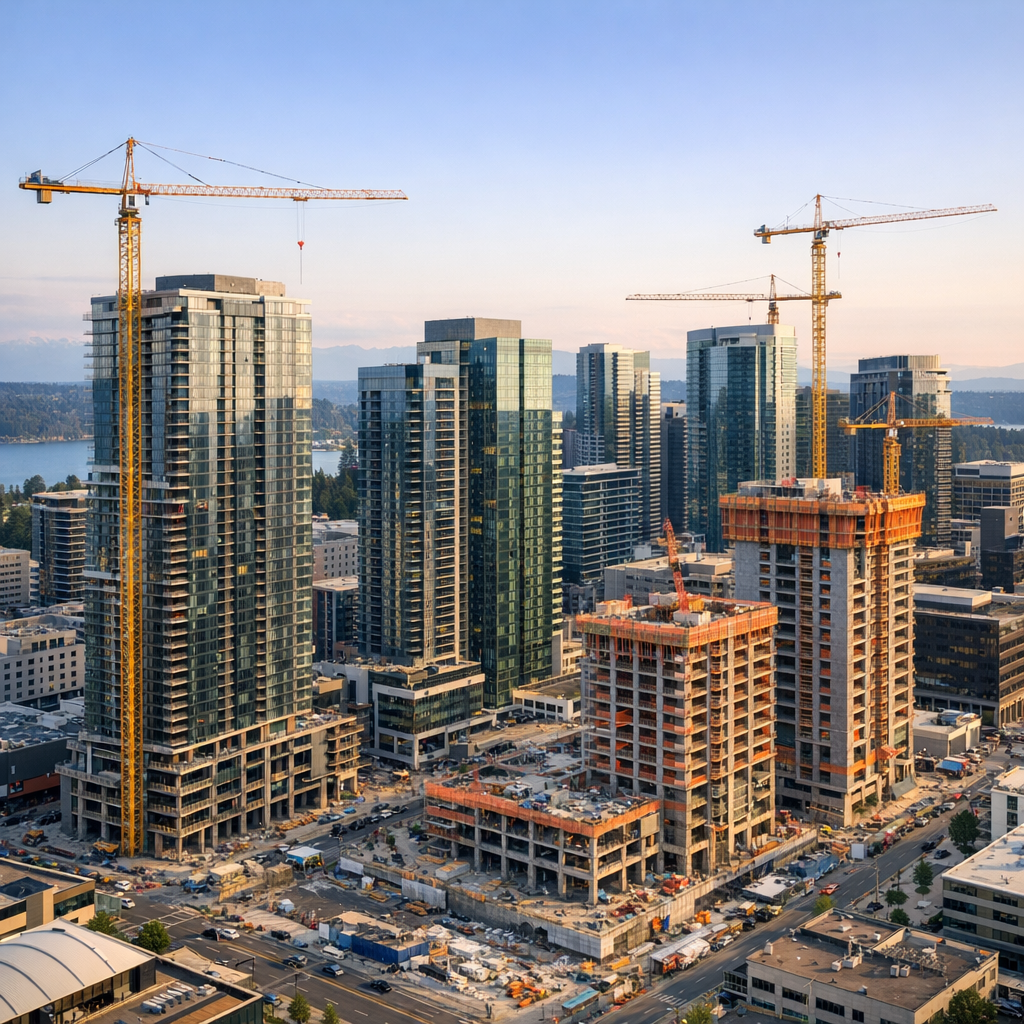
The city isn’t standing still. Bellevue has nearly 70 ongoing residential, mixed-use, and commercial projects, totaling over 7,500 units and an estimated $300 million in value. BelRed is currently the hotspot, with more than 25 active projects. Wilburton, Northwest Bellevue, Downtown, and Crossroads also have high levels of development. (BuildVue tracking)
Affordable Housing and Transit-Oriented Projects
One of the more encouraging trends: Bellevue is placing a growing emphasis on affordability and transit. Projects in the BelRed Arts District will create hundreds of mixed-income and artist-friendly units near light rail, with amenities such as arts hubs, gathering spaces, and community retail. These transit-oriented sites reflect policies from the city’s comprehensive plan and its updated zoning codes. (City of Bellevue announcements)
Implications for Buyers, Renters, and Homeowners
If you’re planning to buy: A softer market may offer better negotiation power, but you’ll still need solid financing to meet high entry prices. For renters, stabilizing growth helps, but expect steep rent in many neighborhoods. And for current homeowners, large-scale developments nearby might bring incremental changes to infrastructure, traffic, and property values.
What to Watch Moving Forward
- Completion of major developments in BelRed, Downtown, and Wilburton — how many units are delivered.
- Implementation of “Next Right Work” code changes: ADUs/DADUs, duplex- and triplex-friendly zoning, and streamlined permits.
- Rent growth patterns in relation to income gains — especially in neighborhoods with planned transit access and mixed-use zoning.
- How affordable housing targets (in city plans) translate into homes actually available to households across income levels.
Overall, Bellevue’s housing market is evolving. While dramatic price inflation has cooled, supply challenges, zoning changes, and new development will shape what’s possible for people who rent, those aiming to buy, and those invested in the future of their neighborhoods.