

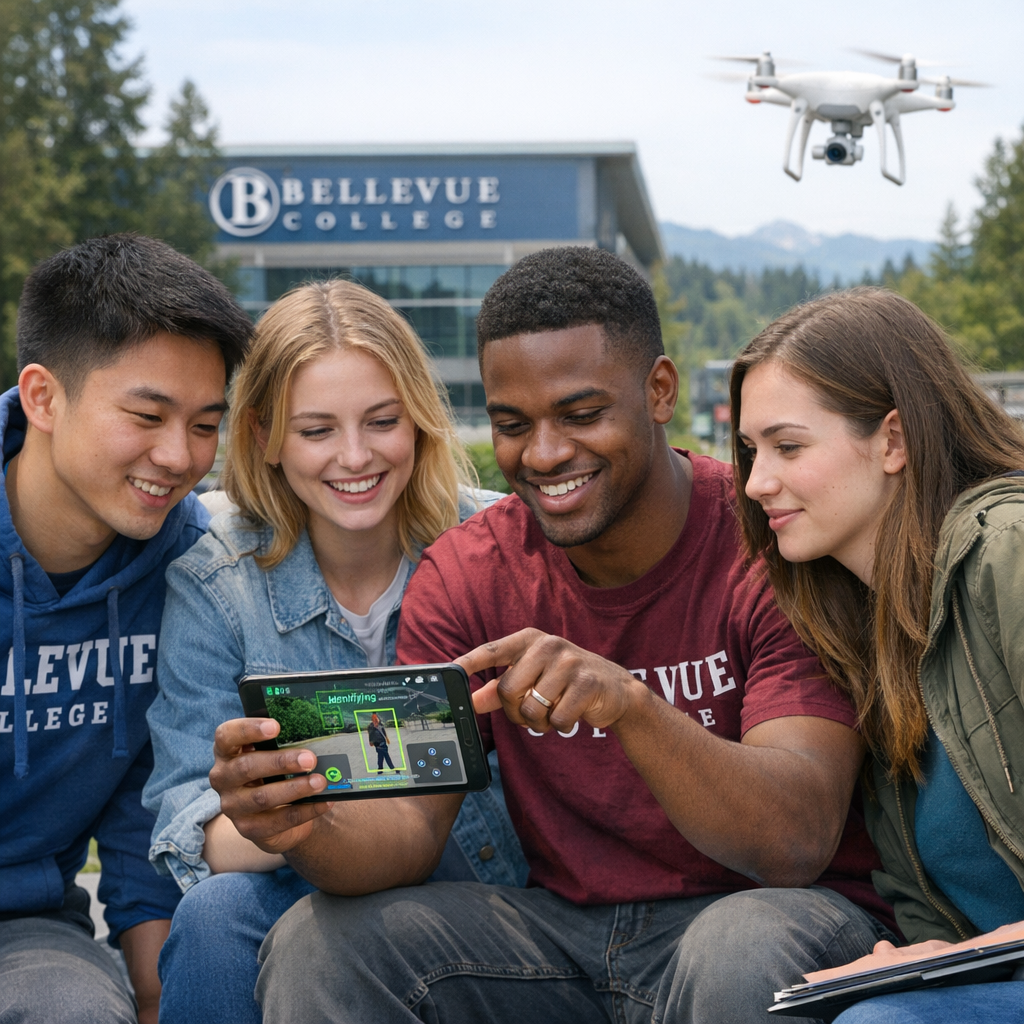
I’m Sophia Robinson, exploring how technology isn’t just for corporate labs—it’s becoming part of our daily routines here in Bellevue. Across startups, civic innovation, and public planning, residents are seeing how tools like AI, start-ups, and connected services are directly changing what it means to live and work in this city.
Startups that make errands and work easier
Bellevue is home to a host of startups making regular tasks more seamless. For instance, OfferUp simplifies buying and selling near you by turning the marketplace into a few taps and photos. If you need something or want to declutter, its app-driven marketplace is changing how locals trade goods. Also rising fast is Humanly, an AI-powered hiring platform that automates initial candidate engagement and scheduling—saving time for both job seekers and companies. This kind of automation is quietly shifting the job market in Bellevue, letting people spend less effort on logistics and more on what they care about.
When tech meets community and public service
Bellevue College, through its partnership with the City’s Civic Innovation Challenge, has launched pilots aimed at improving campus life. One app, FindIt, helps users find lost items using AI-generated descriptions instead of photos with identifying details, making the process more efficient and private. Another, developed by Juganu, uses AI sensors mounted on street lights to monitor vehicle and pedestrian traffic—helping spot bottlenecks or safety risks in real time. These pilots demonstrate how AI isn’t just experimental—it’s helping us walk, commute, or move safely around campus.
Policy, infrastructure, and the “smart” city vision
The City of Bellevue has been digging deep into how emerging technologies can make everyday services better. In its enterprise tech strategy, the city is prioritizing:
- Next-generation connectivity: upgrades in cellular, fiber, WiFi technologies, plus readiness for tools like low-earth-orbit satellite services.
- Data analytics and generative AI: using analytics tools and generative AI to drive insights and improvements in services like permitting, traffic management, or online engagements.
- Smart transportation and infrastructure: preparing for autonomous, connected, electric, and shared vehicles to join Bellevue’s roads. It’s not just about cars; it’s about networks—traffic flow, pedestrian safety, infrastructure maintenance—all increasingly interconnected.
The ripple effect: What this means for Bellevue residents
You might start noticing smoother traffic lights, or getting a text instead of paper notices. You’ll see public planning shaped more by data—with insights from everywhere from light-pole sensors to your feedback online. And you could expect service interactions—city permits, lost & found, public safety—to feel more responsive and tuned to real needs.
What to watch out for
This progress brings questions about privacy, inclusion, and access. As Bellevue leans into AI and sensors, voices from all neighborhoods need to be part of policy and deployment decisions. Ensuring tools work for those who are less tech-savvy is also essential. The city’s regional partnership, The Exchange Northwest, is aiming for that: inclusive civic innovation and equitable access to technology for small businesses and nonprofits.
How you can get involved
If you’re curious to try tools early, some pilots at Bellevue College are open to the public. Local tech meetups—such as Startup425 or Eastside Open Coffee—offer relaxed spaces to learn and connect. And keeping tabs on city forums and surveys lets you share feedback that shapes how tech serves Bellevue, not the other way around.
Technology isn’t just changing Bellevue—it’s growing with us. What feels new now might be standard in a few years. It’s exciting to see—and it’s an invitation for everyone to shape what comes next.