

By Olivia Adams
Bellevue is in the midst of several major ongoing initiatives that are reshaping city infrastructure—from utilities and road safety to transit and green space connections. These projects aren’t just about construction; they reflect Bellevue’s long-term goals around resilience, mobility, and community well-being.
Upgrading Utilities to Meet Growth and Safety Needs
Bellevue’s Utilities Department is executing a suite of capital improvement projects aimed at renewing aging water, sewer, and stormwater systems. Among these are seismic upgrades at the Clyde Hill 390 Reservoir and work to recoat reservoirs in the Crossroads area to remove lead paint and prevent corrosion. Planning is underway for capacity-focused builds, including a new reservoir in the Meydenbauer neighborhood to handle projected demand. These upgrades are essential to ensure clean drinking water, prevent flooding, and maintain environmental health.
Transportation Planning: Balanced for All Modes
Bellevue is updating its Transportation Facilities Plan (TFP) for 2026-2037, a guiding document that helps prioritize improvements for sidewalks, intersections, transit routes, bike lanes, and roads. The city has collected community feedback, weighed options, and compiled candidate projects, several of which include fully funded improvements. The goal: a multimodal system that supports driving, walking, biking, and transit users, including those with mobility challenges.
The Grand Connection Crossing
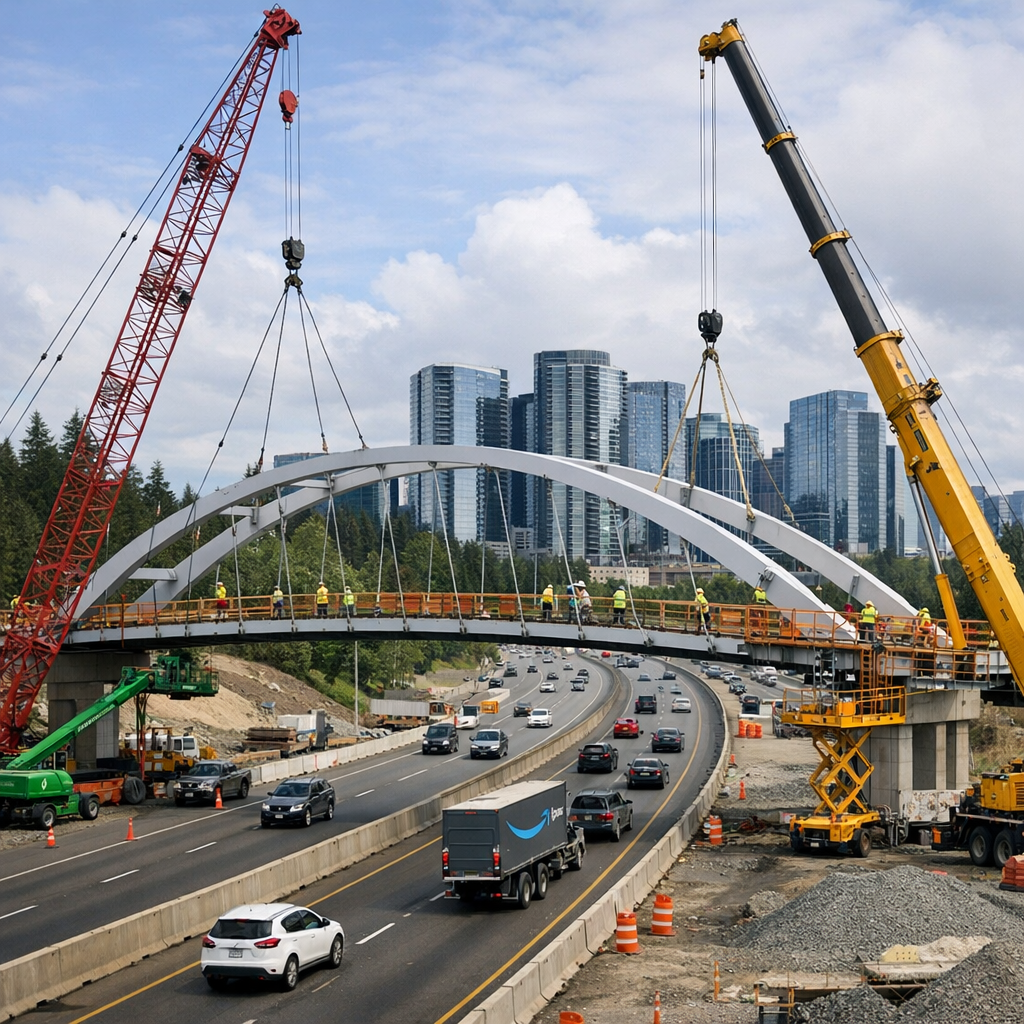
One of Bellevue’s most ambitious transportation and public space projects is the Grand Connection Crossing—a planned pedestrian and bike bridge over I-405 that will link Downtown Bellevue to Wilburton and connect to the Eastrail trail. All required taxing entities have approved participation, allowing the city to move forward with the funding strategy, including tax increment financing (TIF). Once finished, the crossing will be a vital link for pedestrians and cyclists, while also creating public gathering spaces and enhancing connectivity.
Balancing Equity, Safety, and Resilience
Projects across Bellevue are being designed with greater attention to public safety and environmental impact. Flood control and culvert replacement projects are in the pipeline, especially in areas like Valley Creek and Lake Hills—aimed at reducing risks during heavy storms and restoring habitat connectivity. The city is also investing in fire flow improvements, ensuring reliable water pressure for emergencies.
What Residents Should Expect
- Intermittent disruptions: Roadwork, detours, and utility shutdowns are likely in neighborhoods with active upgrades.
- Opportunities for public feedback: Bellevue is using interactive maps and surveys in decision-making for projects large and small.
- Long-term benefits: While construction might feel inconvenient, projects aim to bring improved safety, better connectivity, and increased sustainability.
As Bellevue continues to grow, these coordinated investments in utilities, transportation, and public spaces represent more than just infrastructure—they are shaping the kind of city residents will live in for decades.