

By Mia Cooper
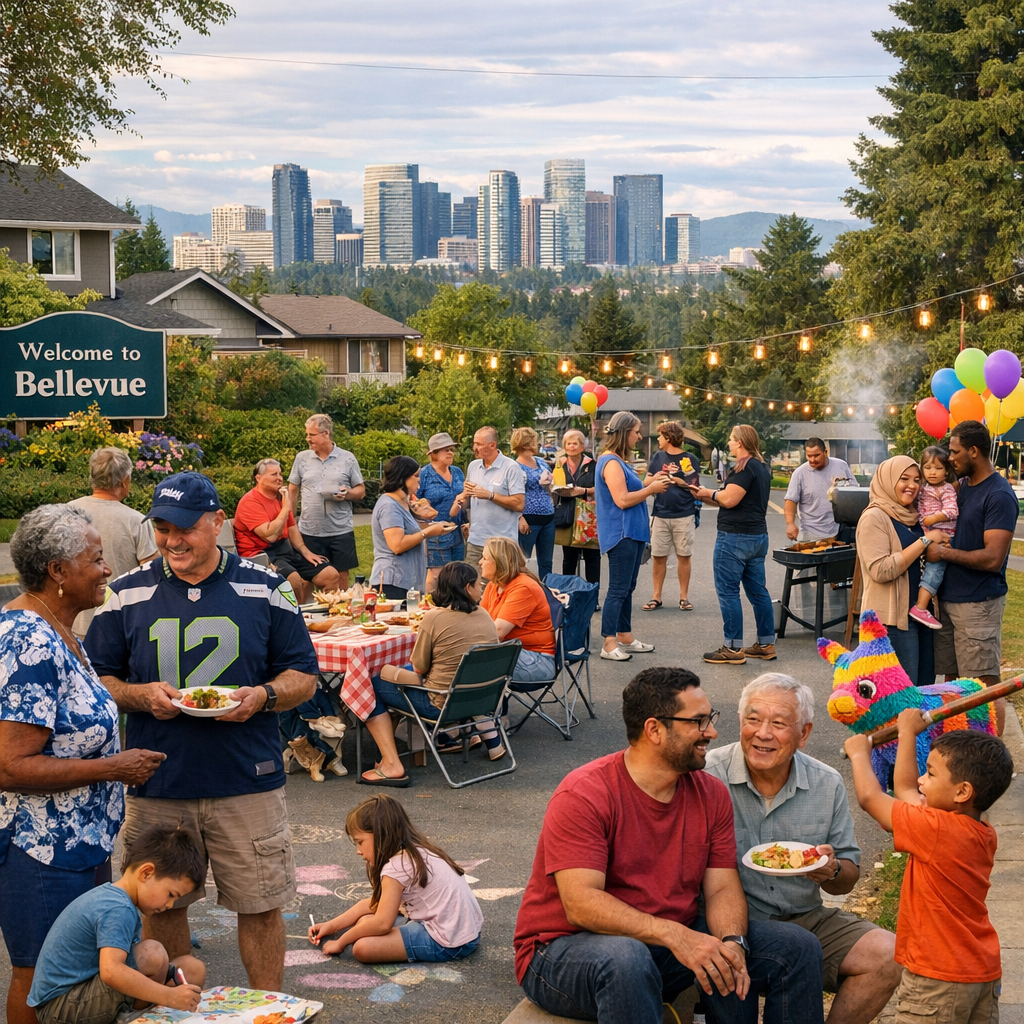
I’ve lived in Bellevue long enough to see how streets, skylines, and demographics change—but also how the core of a city doesn’t need to be erased in order for it to grow. In talking with both longtime residents and newcomers, a few recurring themes come up: affordability, identity, and connection.
The Price of Belonging
Affordability isn’t just about rent or mortgages—it’s about whether someone feels they are welcome here without financial stress. The last VIBe Check survey found that affordability had overtaken almost every other concern, including safety or growth, with nearly 30% of voters naming cost of living as their top issue. Residents don’t want token solutions—they want changes that feel real, that reach people juggling housing, work, and rising basic expenses.
Yet many also worry that the conversation around housing is polarizing: people say yes to affordability in the abstract, but not always in their own neighborhoods. That tension highlights a deeper question: who is allowed to call Bellevue home?
What It Means to Belong
Bellevue’s diversity is not new. Over 40% of local residents are foreign-born, half identify as people of color, and more than 40 languages are spoken in schools. Cultural traditions from many countries shape daily life here—from shops and cuisine to festivals and arts. It’s not always easy: language, customs, and even choices of where to gather or whom to trust can divide us as much as unite us.
For some longtime locals, growth feels like change, sometimes loss. Cafés replaced by high-rises, familiar faces moving away, public spaces that feel less intimate. For newcomers, there’s gratitude—and also the invisible labor of proving belonging. We ask: Can we grow without losing the warmth of neighborhood, the ability to see a friendly face at the park, to feel rooted?
Building Bridges—What We Need
I see small moments making big difference. Programs like “Cultural Conversations,” neighborhood liaisons, and newcomer orientation allow connections across difference. Public budgeting that invites voices across income, generational, and cultural lines—rather than decisions done behind closed doors. Spaces—all kinds of spaces—parks, community centers, cafés—where people can share stories.
We need planning that looks beyond square footage and zoning: what happens when someone can no longer afford to live near their family, or when someone new feels afraid they’ll never belong in a space built before they arrived?
A Call to Neighbors
If you’re reading this, please: think about your story in Bellevue. Notice the small ways you’ve changed or stayed the same. Reach out. Attend a meeting. Share your memories over coffee or at the playground. Our city will grow—how, and in whose image, depends on all of us.
Bellevue is not just buildings, we’re the people inside them. Our strength isn’t our skyscrapers; it’s how we live together as our streets fill up, and how we make room. Truly make room.