

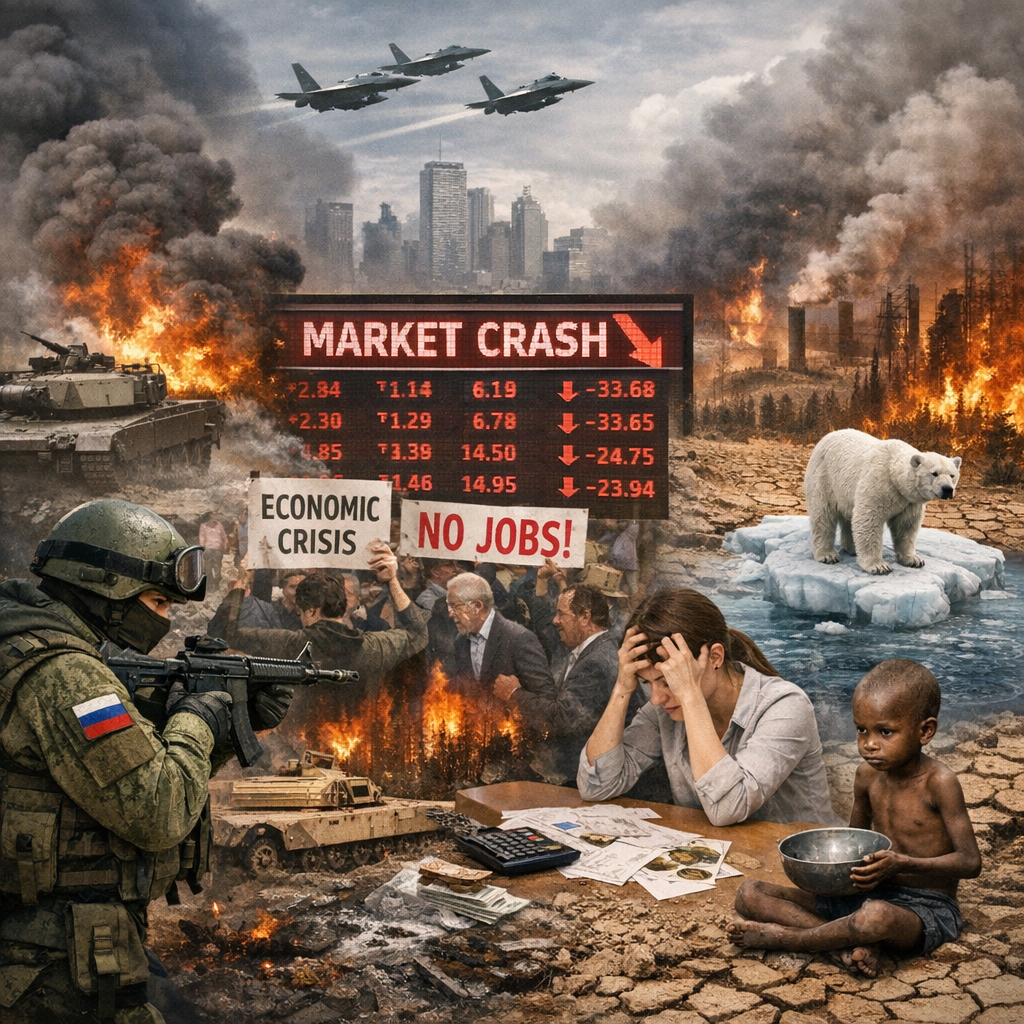
In recent years, the term ‘polycrisis’ has emerged to describe the complex web of simultaneous global challenges that amplify each other’s impacts. This era is marked by the convergence of geopolitical tensions, economic disruptions, environmental crises, and social upheavals, creating a multifaceted landscape of uncertainty.
Geopolitical Tensions
Conflicts such as the ongoing war in Ukraine and escalating tensions in the Middle East have destabilized regions and strained international relations. These conflicts not only affect the countries directly involved but also have ripple effects on global security and economic stability.
Economic Disruptions
Trade policies, including sweeping tariffs imposed by major economies, have led to shifts in global trade dynamics. These changes impact supply chains, influence market behaviors, and contribute to economic volatility worldwide.
Environmental Crises
Climate change continues to manifest through extreme weather events, rising sea levels, and biodiversity loss. These environmental challenges pose significant risks to communities, economies, and ecosystems globally.
Social Upheavals
Social movements and protests have highlighted issues of inequality, governance, and human rights. These movements reflect deep-seated societal concerns and demand attention from policymakers and global leaders.
Understanding the Polycrisis
The era of polycrisis underscores the interconnectedness of global challenges. Addressing these issues requires coordinated efforts, innovative solutions, and a commitment to international cooperation. By recognizing the complexity of these crises, we can work towards building a more resilient and sustainable future.