

By Ava Washington
From Bellevue, WA
The world is confronting some enduring, interlocking global challenges that extend far beyond daily headlines: acute food insecurity, stagnant vaccination coverage, and rising threats from climate-related shocks. These issues touch every region and are vital for understanding the shape of global health and stability.
Food Security Under Strain Everywhere
Recent reports show about 266 million people face crisis levels of hunger or worse—driven largely by conflict, economic instability, and weather extremes. Conflicts like those in the Middle East, Sudan, South Sudan, Yemen, and Afghanistan are disrupting food production and blocking aid. “Climate shocks”—including droughts and floods—are compounding the disruption to livelihoods and agriculture. Food prices and fertilizer costs remain high, squeezing the most vulnerable. Without action, projections warn of more “catastrophe” levels of acute food insecurity in the months ahead.
Vaccination Gains That Could Slip Away
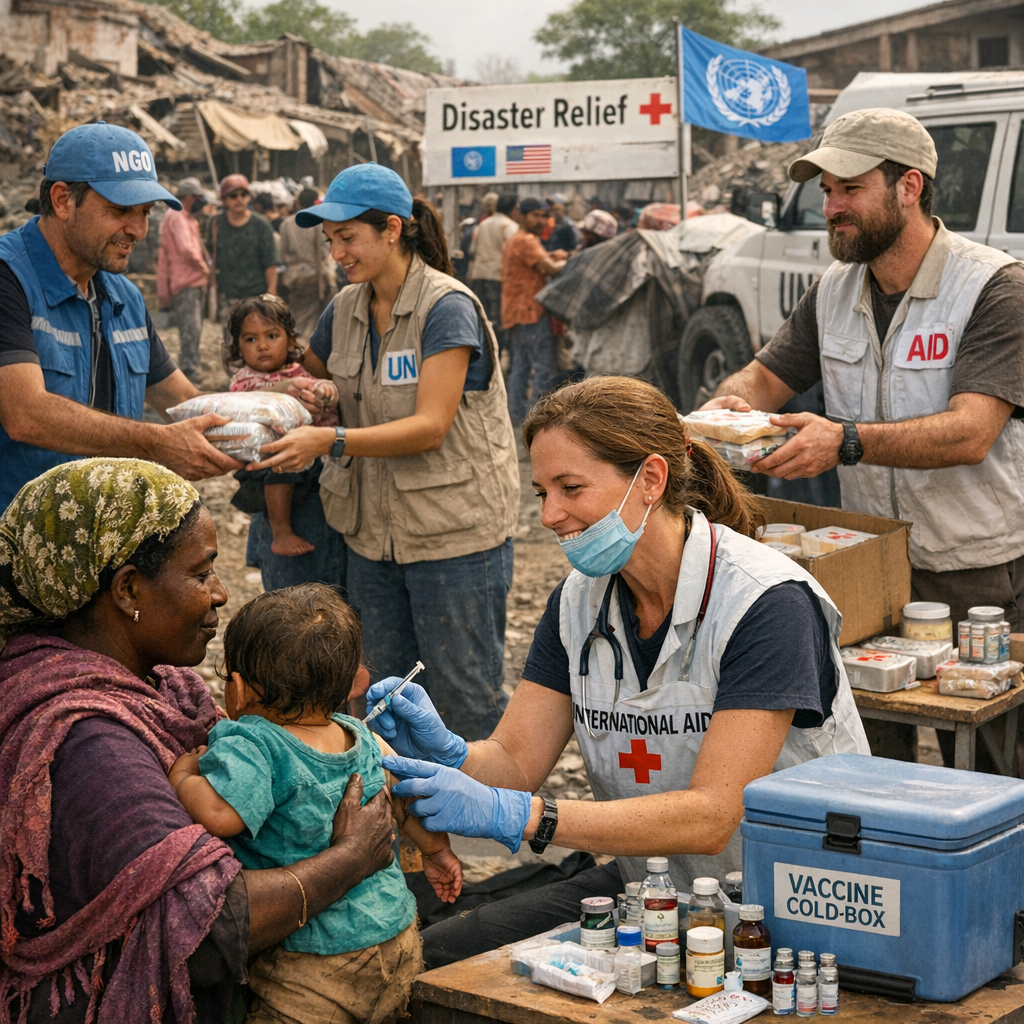
Though some progress has been made in recovering from the dips caused by the COVID-19 pandemic, global immunization coverage remains fragile. In 2025, 90% of infants received at least one dose of the diphtheria-tetanus-pertussis (DTP) vaccine, but only 85% completed the full three-dose regimen. Drop-out rates are significant: millions begin vaccination schedules but fail to finish them. Measles vaccination, in particular, lags behind the coverage needed to prevent outbreaks. In conflict zones, remote communities and underfunded health systems, many children still receive no vaccine at all.
Making Connections
The overlaps between food insecurity and health gaps aren’t coincidental. Poor nutrition weakens immune systems, making populations more vulnerable to disease. Children facing malnutrition are more likely to miss scheduled vaccines, live in areas lacking infrastructure, or be displaced by unstable conditions. Conflicts that interrupt both food distribution and health services act as accelerants of suffering.
Drivers of Risk and What’s Being Done
Some of the key forces fueling these trends:
- Conflict and political instability: Wars disrupt farming, trade, and humanitarian access.
- Climate extremes and El Niño: Longer droughts, heavier rains, and shifting growing seasons challenge production.
- Economic pressure and funding shortfalls: Many low-income countries face high food inflation; at the same time, global aid budgets are falling, affecting nutrition programs and vaccine campaigns.
In response, organizations like WHO, UNICEF, FAO, and aid networks are pushing for:
- Stronger local health systems capable of reaching every child, especially in conflict-affected or remote areas.
- Better preventive measures—including maintaining diversified global food supply chains, investing in resilient agriculture, and enhancing early warning systems for climate shocks.
- Sustainable funding strategies that safeguard critical support even when donor attention shifts.
Why It Matters for Everyone
While households in faraway regions may feel disconnected from today’s global struggles, instability in food systems and public health has ripple effects for all. Price shocks or shortages in staple foods can push inflation upward globally. Disease outbreaks in one region can spread if vaccination gaps are wide. Climate displacement can strain neighboring countries or trigger larger migration flows.
Addressing these challenges isn’t just a moral imperative—it’s essential for maintaining global stability and shared prosperity. Local work—in health clinics, farms, supply chains—matters profoundly. So does global coordination.
Everyone, including readers in Bellevue and Washington state, can stay informed about these trends, support organizations working on the front lines, and advocate for smart policies that strengthen both where they live and across the world.