

By William Gray
Bellevue’s Economic Strengths
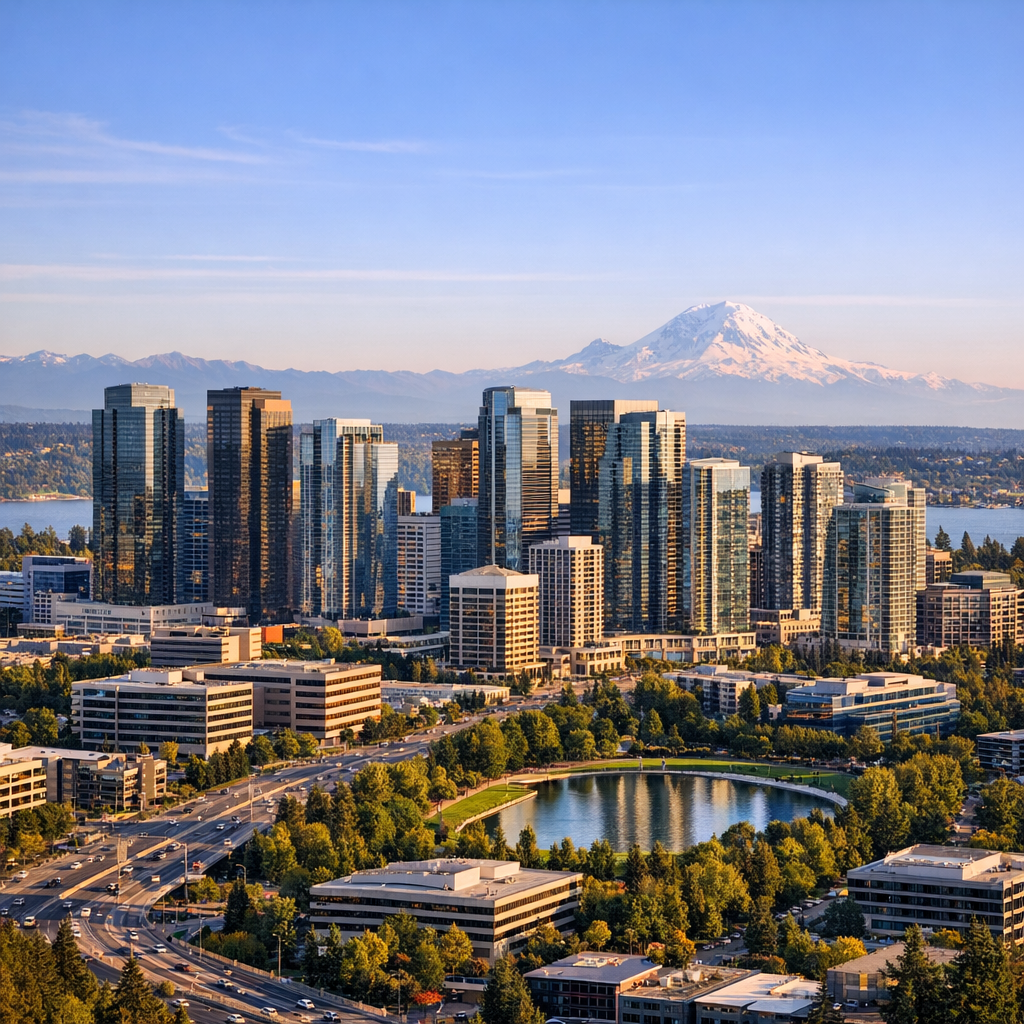
Bellevue is firmly established as one of Washington state’s top hubs for jobs and innovation. It ranks as the second-largest job center in the state, and its median household income has risen significantly—39% between 2018 and 2023—outpacing many peer communities both statewide and nationally. Key assets: a highly educated workforce, strategic transit investments such as the new light rail line, and a diverse mix of major corporations, small businesses, and emerging industries like life sciences. These strengths continue to make Bellevue attractive to businesses big and small.
Challenges Facing Local Businesses
Rising Costs & Affordability
While economic growth has brought greater wealth to many in Bellevue, it has also driven up the cost of living and doing business. Commercial property costs, housing prices, and construction expenses are all high—and in many cases rising. Small businesses report concerns about affordability both for their own operations and for attracting workforce who can afford to live locally.
Office Space & Work Patterns
Remote and hybrid work models remain prominent, and older office spaces—especially in areas like Eastgate—are seeing elevated vacancy rates. This creates both risks for landlords and opportunities for repurposing or upgrading properties. The pressure is on to adapt to changing expectations for workspace, amenities, and location.
Constraints on Housing & Growth
Bellevue is effectively land-locked, which limits how much new development can occur on periphery, making density and redevelopment vital tools. Permit timelines and regulatory burdens are often cited as sticking points for businesses and developers alike. The gap between housing supply and demand continues to create affordability challenges for employees and employers.
Opportunities & Strategic Moves
Small Business Support & Resources
The city, nonprofits, and regional partners offer several programs aimed at helping small businesses and entrepreneurs. Bellevue provides business assistance navigation, the Startup425 initiative offers training and networking, and there are regional accelerators and export programs to connect firms with new markets. Leveraging these resources can help stabilize growth and bring innovation closer to home.
Transit-Oriented & Transit-Enabled Development
The expansion of light rail and improved connectivity across the region offer a chance to rethink how we use space—especially near transit stations and along major corridors. Mixed-use projects can help combine housing, retail, and offices, reducing commute stress and supporting local business districts. This also aligns with the city’s long-term goal of adding tens of thousands of housing units and jobs by 2044.
Workforce & Talent Development
Maintaining Bellevue’s competitiveness depends on ensuring access to skilled workers. Apprenticeships, internships, technical training programs, and partnerships between schools and businesses are essential. Policies that help residents train for in-demand jobs ensure that economic gains are more broadly shared and that labor shortages don’t limit growth.
Things Local Businesses Should Consider Now
- Evaluate whether your current location needs updating—modern amenities, proximity to transit, and flexible space are in demand.
- Factor in total costs, including rent, wages, and transportation, not just the visible ones; rising costs elsewhere can squeeze profit margins.
- Tap into resources like city-offered business support, accelerators, and networks to gain skills, mentorship, or external funding.
- Collaborate with staffing and education programs to build pipelines of local talent, especially in tech, health, and service sectors.
- Mingle location and development strategy: consider co-working, pop-ups, or shared spaces in transit-adjacent zones to reduce overhead.
Conclusion
Bellevue stands at a crossroads where its economic foundation is strong, but sustaining that strength will require mindset shifts and intentional policy support. For local businesses, adapting to higher costs, evolving work patterns, and the housing squeeze will be key. At the same time, smart use of transit infrastructure, workforce development, and business assistance programs offer paths toward resilience and growth. With collaboration—among businesses, government, and civic groups—Bellevue can ensure that its economic promise is not just sustained, but shared.