

By Michael Carter
Bellevue’s Weather in Perspective
Bellevue, Washington, experiences a mild, warm-summer Mediterranean climate (classified as “Csb” under the Köppen system). Summers are dry with daytime highs averaging in the mid-70s °F and little humidity. Winters are wet and cool, with most rainfall falling between October and April, and average low temperatures in the mid-40s °F. Snow is rare, and freezing temperatures typically occur fewer than twenty days per year. Bellevue averages around 30-37 inches of rain annually.
Signs of Climate Change in Bellevue
Long-term data shows Bellevue has warmed by approximately 1.4 °C (about 2.5 °F) since the 1940s, a statistically significant trend. The number of frost days in winter has declined, while summer high temperatures occur more frequently. Rainfall patterns remain seasonal but show variability, with wet seasons intensifying and summer droughts becoming more pronounced.
Local Actions: Bellevue’s Environmental Stewardship
In 2025, Bellevue adopted the Sustainable Bellevue Plan 2026-2030, a roadmap to reach carbon neutrality by 2050. The plan targets actionable focus areas: energy & buildings, mobility & land use, materials & waste, natural systems, and climate resilience. Key strategies include boosting renewable energy, expanding green building support, increasing tree canopy, and improving stormwater systems.
Tree Canopy & Natural Spaces
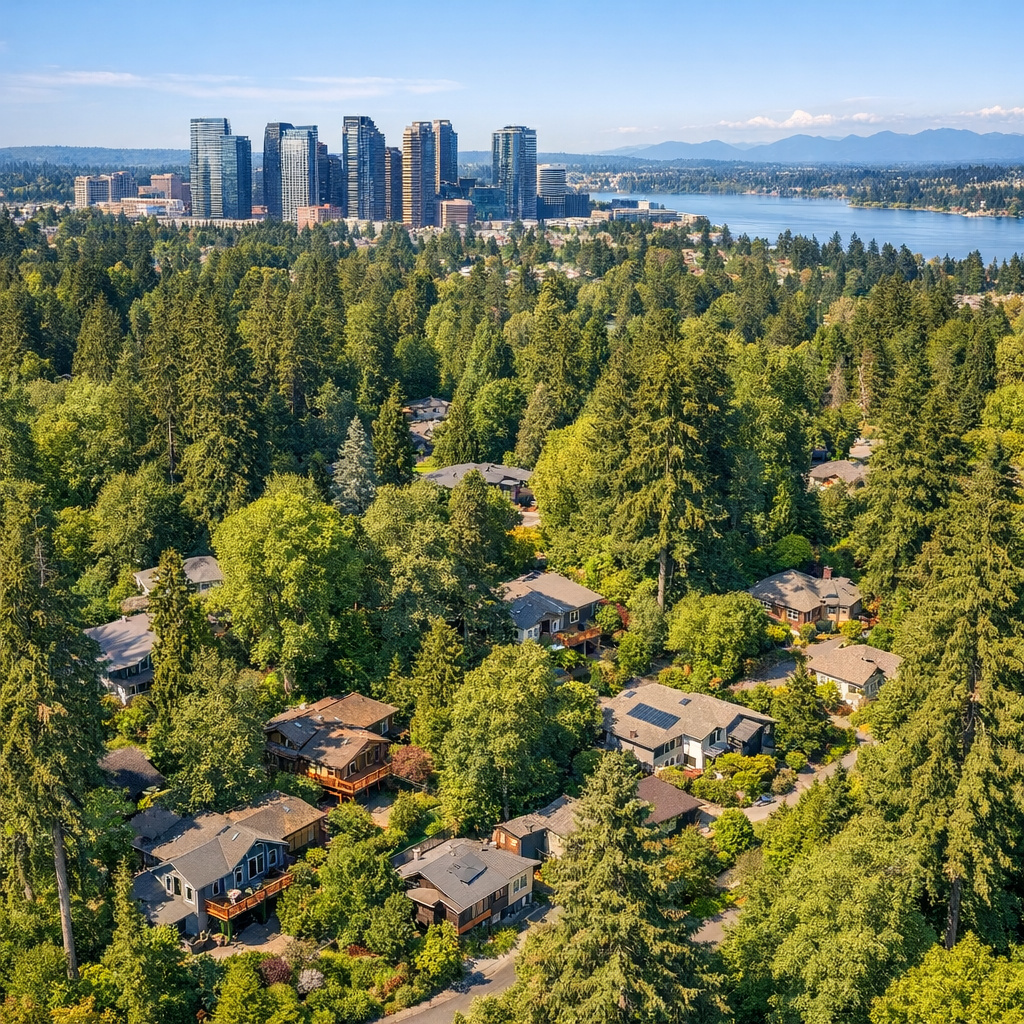
Bellevue aims to reach 40% tree canopy cover citywide. Recent assessments placed the current coverage near 39%, with slight net loss in residential neighborhoods but gains in parks. The plan includes equitable tree planting in areas with low canopy and high heat vulnerability, plus support for urban forests and native growth areas.
Reducing Emissions & Energy Use
Since 2011, Bellevue has reduced community-wide greenhouse gas emissions by about 12% despite population and job growth. Municipal operations have achieved more substantial declines—over 50%—thanks to cleaner electricity, energy efficiency, and transportation changes. New programs support solar installations, green building design, and reducing drive-alone commuting.
What Bellevue Residents Can Do
- Plant climate-adapted tree species in your yard or along sidewalks. Even small canopy increases help with cooling and air quality.
- Reduce water use during dry summers: low-water landscaping, rain gardens, and drought-resistant plants.
- Cut energy consumption through efficient lighting, heating, and support for clean energy sources.
- Use transit, biking, or carpooling more—transportation remains a major emissions source.
Looking Ahead
Bellevue is navigating shifts in climate—warmer winters, more variable rainfall, hotter summer spikes—that align with broader Pacific Northwest trends. The city’s policy goals, coupled with community engagement, aim to build resilience across neighborhoods and ecosystems.
Weather and environment are deeply interwoven with how we live, where we build, and how we move. Bellevue’s path forward depends on both individual choices and collective action to preserve livability for now and future generations.