

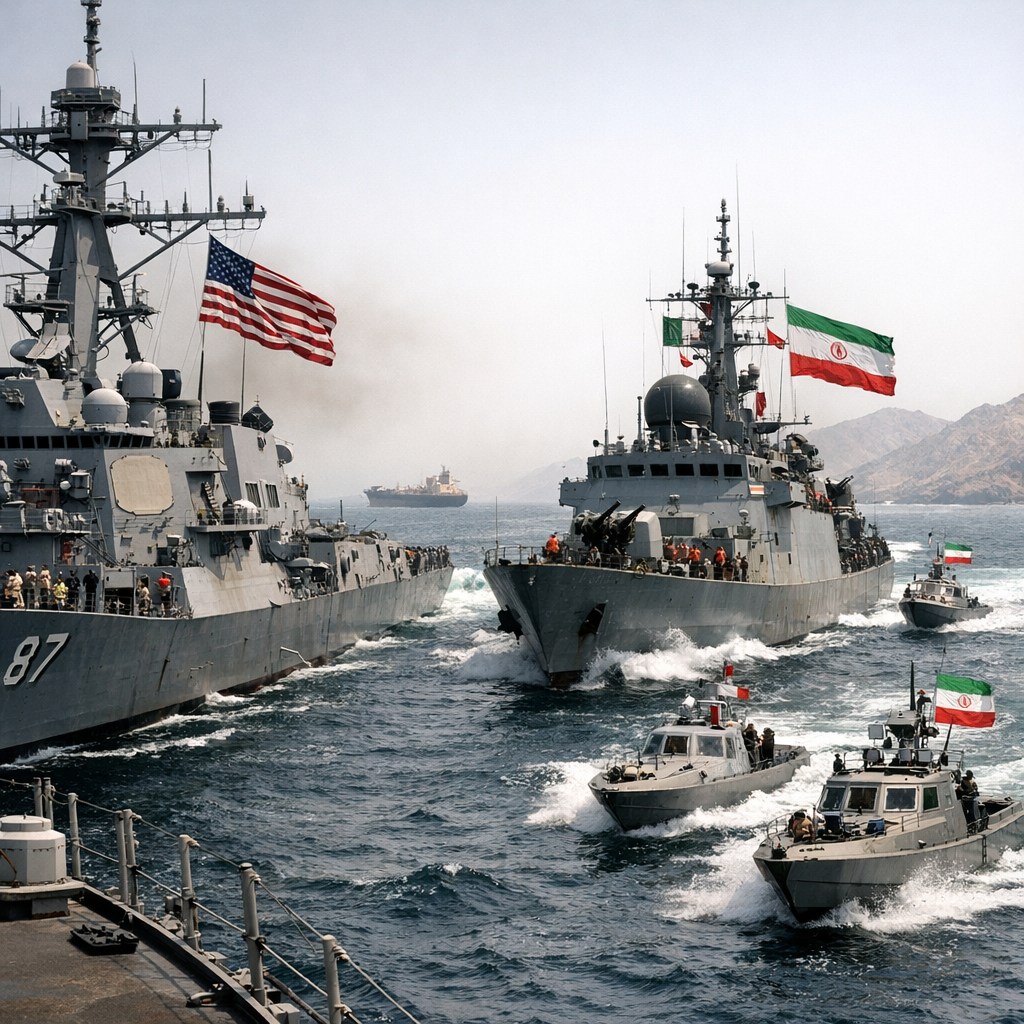
The Strait of Hormuz, a vital waterway for global oil shipments, has become the focal point of escalating tensions between the United States and Iran. Recent military engagements in the region have raised concerns about the stability of international energy markets and the prospects for peace in the Middle East.
Background of the Conflict
Reports indicate that both nations have engaged in military actions over the Strait of Hormuz, marking the first deadly clash since a ceasefire was established in early April. This escalation underscores the fragile nature of the current truce and the deep-seated mistrust between the two countries.
Implications for Global Markets
The Strait of Hormuz is a critical chokepoint through which a significant portion of the world’s oil supply is transported. Any disruption in this region can lead to volatility in global oil prices, affecting economies worldwide. The recent standoff has already caused fluctuations in oil markets, with stakeholders closely monitoring the situation.
Regional Stability at Risk
The renewed hostilities have broader implications for regional stability. Neighboring countries are on high alert, and there is growing concern that the conflict could spill over into other parts of the Middle East, further complicating diplomatic efforts and humanitarian conditions.
Path Forward
Diplomatic channels remain open, with international mediators urging both parties to exercise restraint and return to negotiations. The global community emphasizes the importance of maintaining open sea lanes and ensuring the free flow of commerce through the Strait of Hormuz.
As the situation develops, it is crucial for all involved to prioritize dialogue and seek peaceful resolutions to prevent further escalation and safeguard global economic stability.