

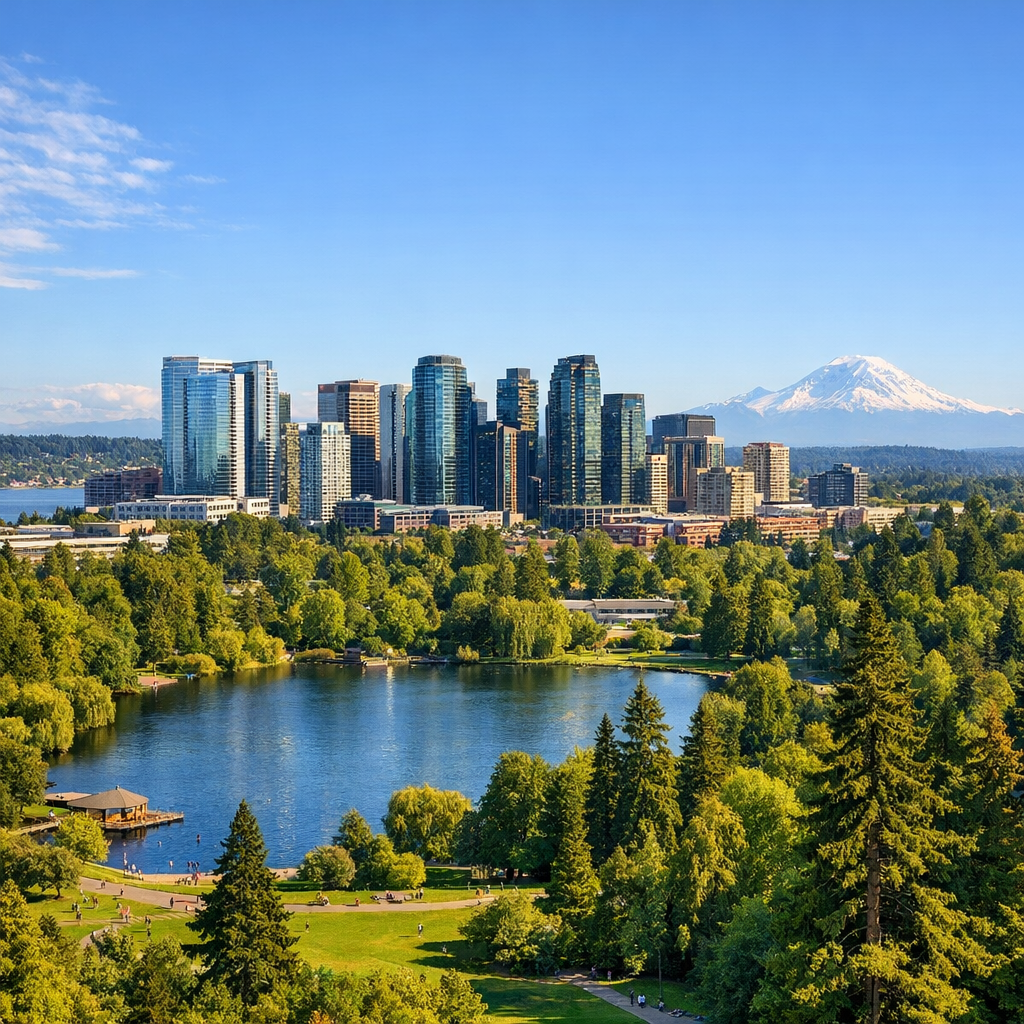
Bellevue, Washington, offers a unique climate characterized by mild temperatures and distinct seasonal variations. Understanding these patterns can help residents make informed decisions about daily activities, home maintenance, and environmental stewardship.
Seasonal Climate Overview
Bellevue experiences a warm-summer Mediterranean climate, classified as Csb under the Köppen system. This results in warm, dry summers and cool, wet winters.
Summer (June to September)
Summers are typically warm and dry, with average high temperatures ranging from 70°F to 77°F (21°C to 25°C). July and August are the warmest months, often reaching the upper 70s. Rainfall is minimal during this period, averaging around 0.82 inches (21 mm) in July. The low humidity and pleasant temperatures make summer an ideal time for outdoor activities.
Winter (November to March)
Winters are cool and wet, with average high temperatures between 47°F and 52°F (8°C to 11°C). January is typically the coldest month, with average lows around 36°F (2°C). Bellevue receives most of its annual precipitation during this season, with December averaging about 6.09 inches (155 mm) of rainfall. Snowfall is rare but possible, with the city averaging 20-30 frost days per year.
Environmental Initiatives
Bellevue is committed to environmental sustainability and has implemented several initiatives to reduce its ecological footprint.
Greenhouse Gas Emissions Reduction
The city has set ambitious goals to reduce community-wide greenhouse gas emissions by 50% by 2030 and 95% by 2050. As of 2024, Bellevue reported a 4.6% decrease in emissions from the previous year, attributed to lower energy use, decreased fuel-intensive transportation, and increased reliance on renewable energy sources.
Tree Canopy Preservation
Maintaining urban green spaces is a priority for Bellevue. The city’s tree canopy slightly decreased from 39.6% in 2021 to 39.3% in 2023, representing a loss of about 70 acres. However, tree canopy in city parks increased by 38 acres during the same period. Residents are encouraged to participate in tree planting and preservation efforts to help maintain and expand the city’s green spaces.
Adapting to Climate Patterns
Understanding Bellevue’s climate patterns allows residents to better prepare for seasonal changes. During the dry summer months, it’s important to practice water conservation and be mindful of fire risks. In the wet winter season, ensuring proper home insulation and drainage can help prevent weather-related issues.
By staying informed about local climate trends and participating in community environmental initiatives, Bellevue residents can contribute to the city’s sustainability goals and enjoy a comfortable living environment year-round.