

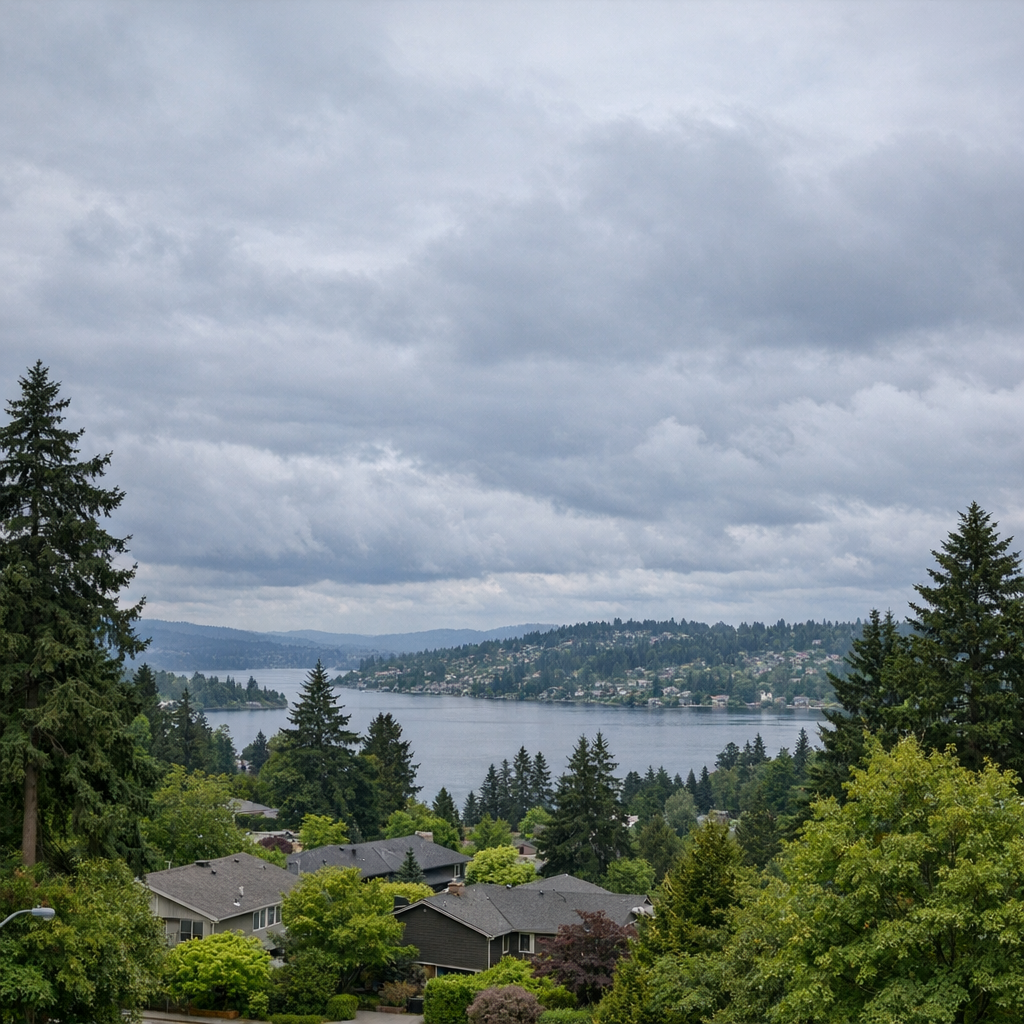
Hi everyone — Michael Carter here with your Local Voices piece on Bellevue’s weather & environment. Our community cares about the seasons and about what they mean for our homes, streets, wildlife, and future. Let’s dive into what we can expect from Bellevue’s climate, how it’s changing, and what that means for us.
Typical Weather Rhythms in Bellevue
Bellevue enjoys a mild, marine-influenced climate. Summers are warm and dry, with daytime highs often in the mid-70s to upper-70s °F and very little humidity. Winters are cloudy, wet, and cool, with average highs in the upper 40s to low 50s, lows dipping into the upper 30s. Snow is rare and light.
Annual rainfall hovers around 34 to 37 inches, with November typically the wettest month and July the driest.
These patterns are what many of us consider “normal” here.
Weather averages don’t tell the whole story — extremes and surprises are becoming more frequent.
Emerging Climate Trends & Concerns
1. Rising Temperatures & Heat Events
Overall temperatures are creeping upward. Summers are seeing more warm spells, and even in winter, cold snap patterns are shifting. Heatwaves — though still less intense than in inland regions — are becoming a concern, especially for people without good cooling or those with health vulnerabilities.
2. Increased Rain, Storms & Flood Risk
Climate modeling and recent assessments show Bellevue is at greater risk of heavy precipitation events in the winter, which can overwhelm stormwater systems, cause creek overflows, and damage infrastructure. Areas around creeks, especially Lower Coal Creek, are identified as more vulnerable to flooding during intense storms. Green stormwater infrastructure (more pervious surfaces, tree canopy, rain gardens) is being planned and built to help.
3. Heat + Water Stress
Despite our relatively wet climate, drought periods are possible — especially when warm, dry summer stretches align with low snowpack in the mountains. Hot, dry spells stress vegetation, increase wildfire and smoke risks, and impact water quality. Streams and salmon habitat are sensitive to warmer stream temperatures and polluted runoff.
What Bellevue Is Doing — And How You Can Help
The City has active plans in place: for emissions reductions, habitat protection, and climate resilience. Key goals include cutting community-wide greenhouse gas emissions by half by 2030 and reaching carbon neutrality by 2050. There’s also work underway to protect aquatic and terrestrial habitats, especially for species like Chinook salmon and native cedar trees, and to preserve Bellevue’s tree canopy, which is close to its goal of 40%.
Public dashboards show how Bellevue is progressing in areas like energy use, waste management, mobility, and natural systems.
Everyday Actions That Make a Difference
- Plant or preserve local trees — they cool neighborhoods and reduce runoff.
- Use rain barrels, native landscaping, and pervious surfaces where possible.
- Cut energy use — efficient appliances, tuning HVAC systems, using fans instead of AC.
- Think low-emission travel — walking, biking, transit, carpooling.
- Stay informed during weather alerts — floods, smoke, heat waves. Vulnerable neighbors often need support.
Looking Ahead
What we’re experiencing are broadly gradual shifts — warmer average temps, wetter winters, drier and hotter summers — but the impacts can hit fast during extreme events. Bellevue’s strength comes in planning and action. As residents, our daily decisions—how we build, how we drive, how we treat our yards—really add up.
I’ll keep watching the trends — through Bellevue’s official reports, climate vulnerability assessments, and weather normals — and bring updates in this column on what we can expect and how to stay ahead. Until next time, stay curious, prepared, and connected to the place we share.