

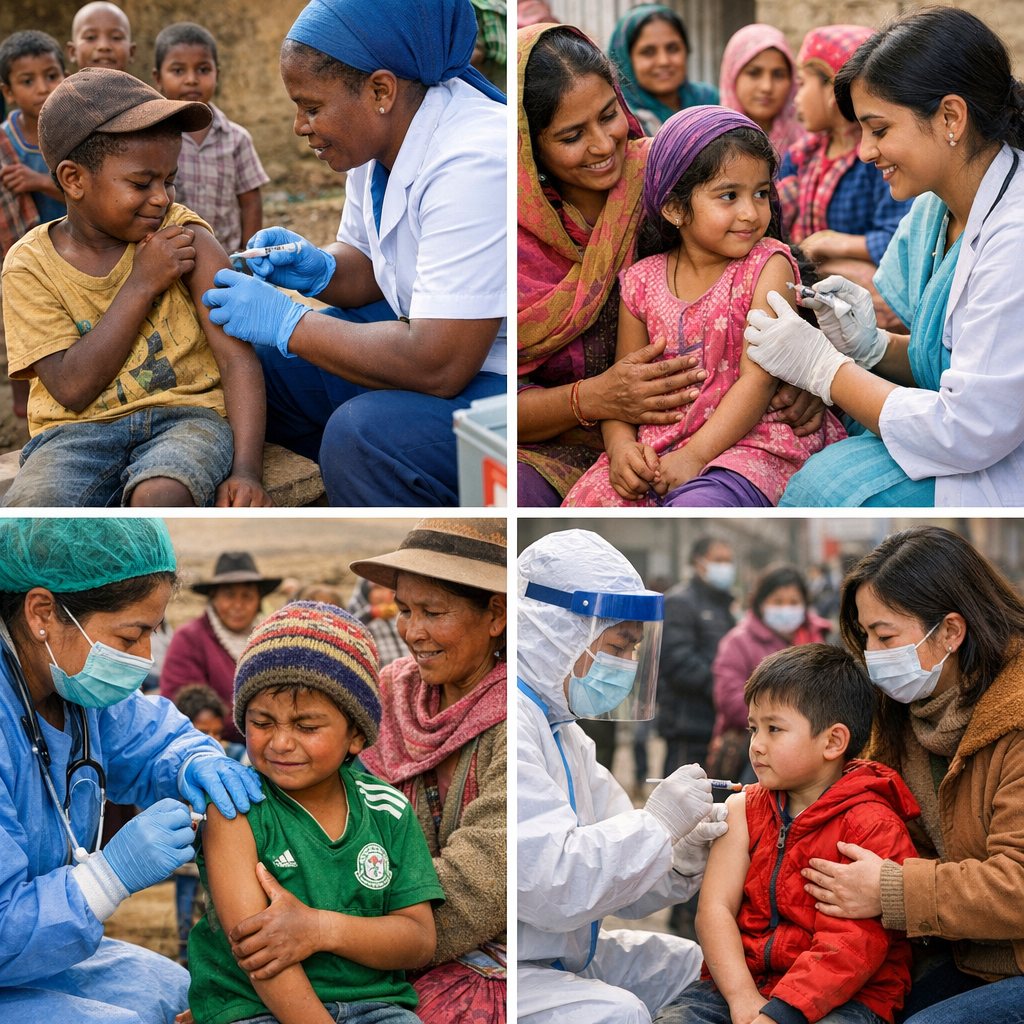
In our interconnected world, immunization isn’t just a medical necessity—it’s a foundation for health equity, economic stability, and human rights. Let’s take a close look at where global vaccination efforts stand, the challenges that remain, and what this means for communities everywhere.
Where We’ve Made Strong Progress
Vaccines continue to prevent suffering and death on a massive scale. Each year, childhood immunization saves roughly 4 million lives. In recent years, global childhood coverage for three doses of the diphtheria, tetanus, and pertussis vaccine (DTP3) reached about 85 %. Coverage of the first dose of measles vaccine is near that same level. These successes are the result of decades of investment, coordination, and watchful public health systems. (Data reported for 2025.)
Where Gaps Still Cause Alarm
Despite these gains, hard-to-reach populations remain underserved. An estimated 13.5 million children globally are “zero-dose”—they haven’t received even one essential vaccine. Coverage for vaccines like HPV—designed to prevent cancers—lags far behind, with only about a third of eligible girls receiving the first dose in 2025. Yellow fever protection in countries at high risk is also severely under target, with only about half of those populations covered. (2025 statistics.)
What Drives Immunization Inequities
- Socioeconomic inequalities: Children in lower-income countries often face barriers like distance to clinics, financial costs, and healthcare workforce shortages.
- Geographical and infrastructural challenges: Rural areas, conflict zones, and remote communities may have sporadic or no access to cold-chain storage and consistent supply.
- Cultural and bureaucratic barriers: Local beliefs, distrust in medical systems, lack of outreach in minority or refugee populations, and unclear eligibility impede uptake.
- Systemic health policy gaps: Even nations with high overall coverage can conceal wide disparities among regions or groups if equity isn’t built into program designs.
Global Targets: Ambition vs. Reality
The global Immunization Agenda 2030 (IA2030) aims to ensure that no one is left behind—targeting full access, stronger disease prevention, and better health equity. But recent data suggest many countries are off track. While global coverage rates have more or less plateaued, they often mask internal gaps—around marginalized or remote communities—where vaccine delivery remains unreliable.
Why Immunization Equity Matters Locally and Globally
The ripples of immunization reach far beyond health:
- Economic resilience: Outbreaks of vaccine-preventable diseases can impose heavy costs—on hospital systems, on disrupted livelihoods, on growth.
- Human rights and social justice: Access to life-saving vaccines is increasingly understood as an essential part of the right to health. Denying access due to geography, income, or social status is increasingly viewed as not just unjust but unacceptable.
- Global health security: Diseases don’t respect borders. Gaps in one country can increase risk everywhere—either by breeding outbreaks or creating conditions for mutations.
Strategies Underway to Close the Gaps
Health agencies and governments are pursuing multiple strategies to improve immunization equity:
- Adaptive service delivery: Bringing vaccines to underserved areas through mobile clinics, outreach campaigns, and integrating services like maternal care and school-based programs.
- Data-driven policies: Using disaggregated data to identify local pockets of under-immunization, tracking progress, and making targeted investments.
- International cooperation: Alliances like WHO and GAVI are helping low- and middle-income countries to access supply, funding, and technical capacity to scale immunization programs.
- Community engagement: Working with trusted local leaders to build vaccine confidence, tailor messaging, and reduce distrust.
What Everyone Can Do
From Bellevue to distant corners of the globe, every voice and action counts:
- Support accurate information—helping to counter misinformation.
- Back policies and organizations that prioritize equitable vaccine access.
- Advocate for funding, infrastructure, and leadership, particularly in vulnerable communities.
- Collaborate locally—towns and neighborhoods can band together on health outreach, school programs, and ensuring basic services reach all.
Immunization isn’t just about science—it’s about justice. And while substantial progress has been made, we still have work ahead to ensure that every child, in every community, has the protection they deserve.