

By Mason Jones
National economy shows mixed progress
The U.S. economy in mid-2026 reflects a delicate balance. Inflation has eased for certain non-volatile items, especially in goods and services—core CPI recently slipped to about 2.6 percent annually excluding food and energy. Headline inflation, however, remains elevated, largely driven by erratic energy prices and costs passed along from tariffs. The Congressional Budget Office projects inflation to decline toward the Federal Reserve’s 2 percent target in coming years, assuming no new major shocks in trade or energy.
Employment remains solid; the unemployment rate is projected to stay near 4 percent despite slowing job growth. GDP growth is forecast at just over 2 percent for 2026. But consumers continue to feel pressures: groceries, rent, and everyday services make up a larger share of out-of-pocket spending, straining budgets despite broader inflation easing.
Polarization shapes political identity
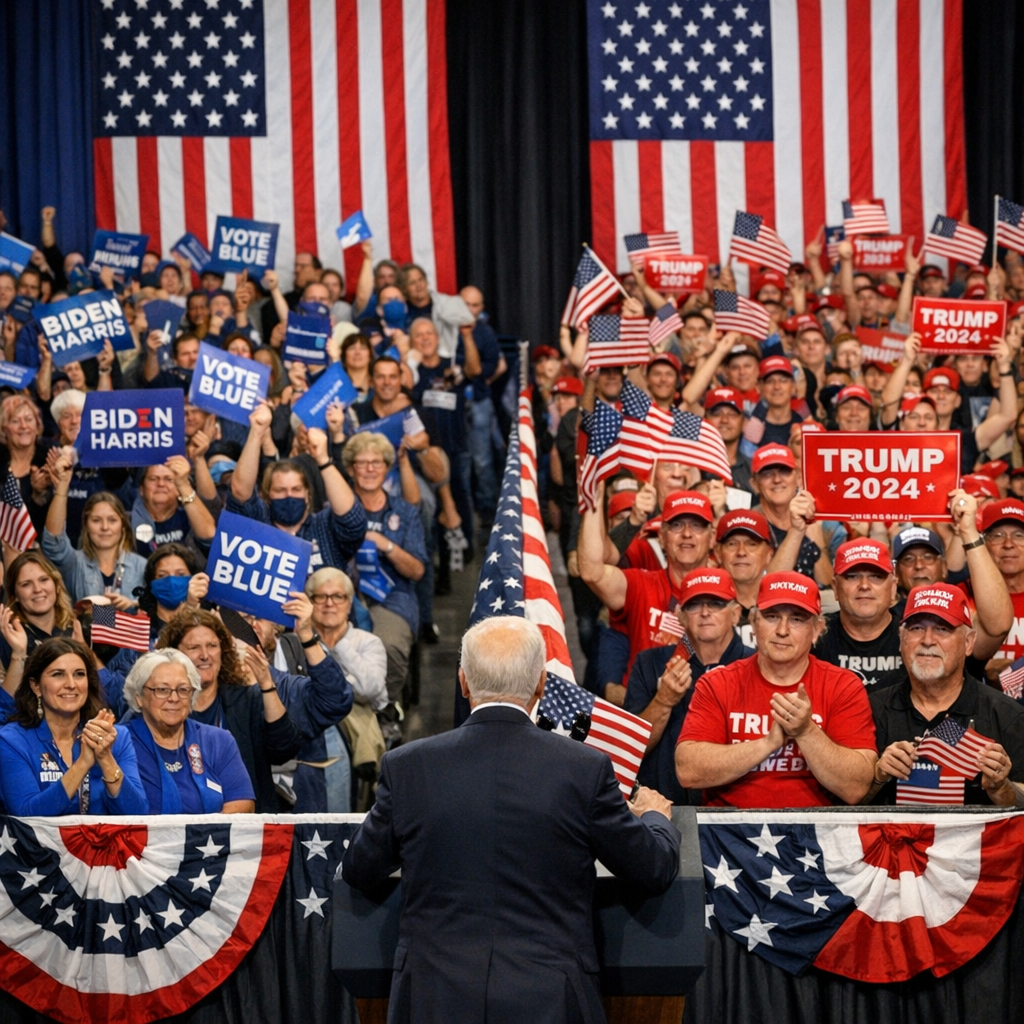
Amid economic uncertainty, Americans are increasingly sorting themselves into ideological camps defined by values, political style, and outlook. A recent nine-group political typology shows four highly engaged groups—two strongly aligned to the right, two to the left—with remaining groups mixing leanings and emphasizing different issues. These include moderates concerned with civility, those focused on economic security but uneasy with identity politics, and politically disengaged people.
Tensions are less about policy alone and more about cultural judgments—how citizens see democracy, morality, immigration, and national identity. Distrust of institutions is widespread. Views of Congress, the Supreme Court, and federal agencies are deeply divided along partisan lines. Both sides express concern over whether the country is heading the wrong way, but they point to different culprits.
What to watch going forward
With midterm elections approaching, a few trends will be especially important: whether inflation remains under control—or whether energy and trade policy re-ignite price pressures; how middle-leaning voters perceive the integrity and responsiveness of institutions; and how identity-related issues like immigration and race will interact with economic concerns in determining who turns out to vote.
Issues such as immigration, gender and LGBTQ+ inclusion, and national security are gaining prominence alongside traditional economic issues. The interplay of culture and policy could shape not just who wins upcoming elections, but also how divided the country becomes for years to come.