

By Mia Cooper
Feeling the strain beneath the beauty
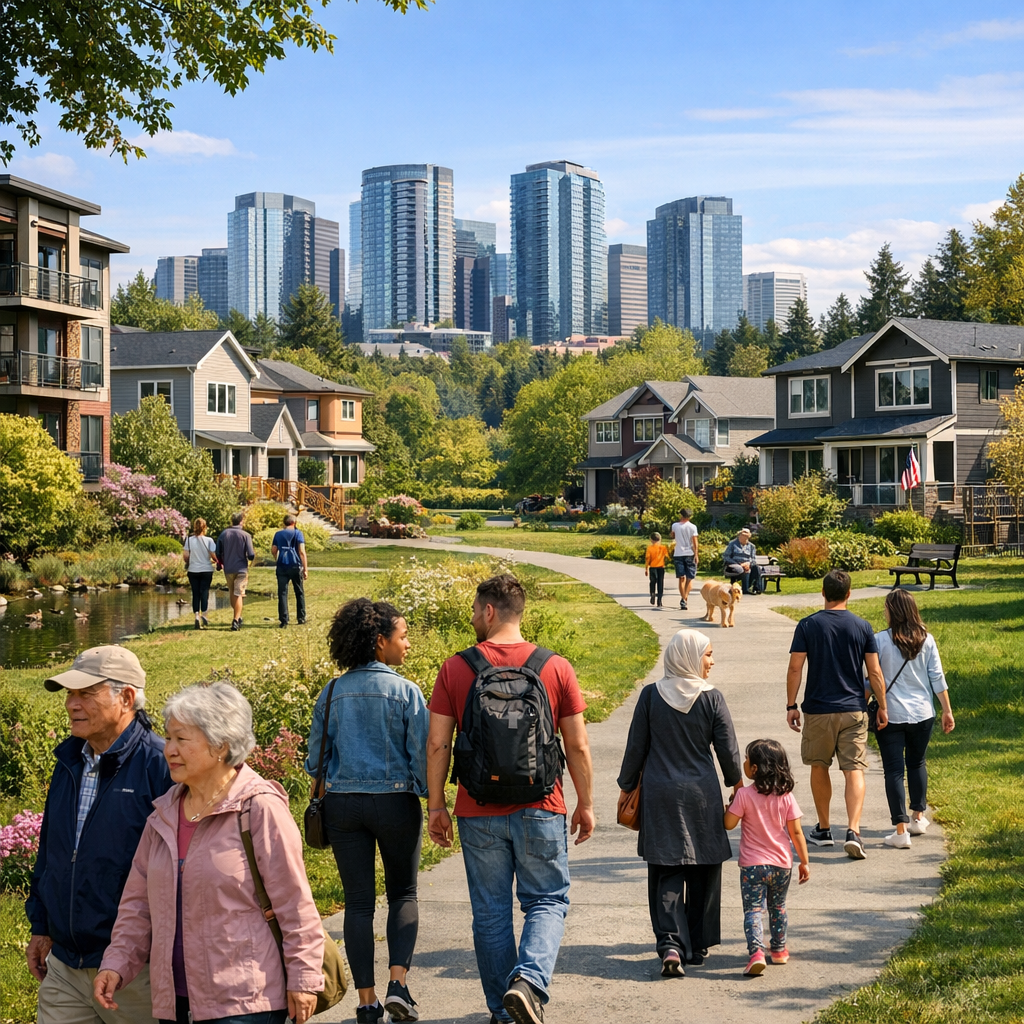
Bellevue is often praised as a “City in a Park” for its lush trails, beach parks, and vibrant open spaces. Many residents tell me those places and the programs in community centers are lifelines—spots to breathe, connect, walk, relax with family. In a recent survey, nearly 95% of Bellevue residents said parks and recreation enhance their quality of life. Still, when I look beyond the green canopy, I see a growing tension under the surface: housing growing more expensive, more options narrowing, and many feeling they don’t belong anymore. Belonging sometimes seems tied to income rather than simply living here.
What people are telling the city
The city’s feedback rounds—open questionnaires, housing forums, planning-policy guides—reveal concern. Over half of respondents report that progress towards providing housing affordable to all income levels is below average or worse. Affordability and housing types were the issues raised most frequently when people were asked what Bellevue should prioritize for future generations.
Through VIBe (Voter Insights Bellevue) polling, I’ve heard that middle-income folks are more concerned than ever: prices, taxes, healthcare—they all loom large. But when it comes to building low-income units in neighborhoods, support seems to drop: many are supportive in principle but worried about where those units go, and how they change things.
What makes belonging harder
Several things stand out in what residents say:
- Cost pressures: Many are stretched by housing or rent prices that don’t align with everyday wages. Even those with stable jobs—teachers, first responders, city workers—often can’t find a home within reach.
- Limited housing options: Large single-family homes and high-end condos dominate more of the landscape. When entry-level homes and mixed-income developments are proposed, they sometimes face resistance based on concerns about character, school crowding, or appearance.
- Uneven access and voice: Immigrant and renter communities often say that official meetings, engagement forms, or feedback periods don’t reach them. Language, timing, internet access, or even the assumption of familiarity often leave them on the sidelines.
Paths toward belonging
How do we narrow that gap between “living in Bellevue” and “belonging in Bellevue”? Here are a few suggestions based on what people are expressing and what seems possible:
- Diverse housing solutions: Support greater variety—tiny homes, accessory dwelling units, smaller multi-family buildings—in locations across town, not just in a few zones.
- Fair policies, not just fairness arguments: Inclusionary zoning or mixed-income requirements help ensure some affordable housing is built in every neighborhood. Through policy tools, affordability becomes part of development, not a side discussion.
- Deeper community engagement: Go where people are—local cultural centers, faith communities, service providers—and offer forms and meetings in peoples’ preferred languages. Make participation feel accessible, not intimidating.
- Broader definitions of belonging: Recognize that belonging isn’t just about physical space—it’s about culture, community institutions, being able to stay despite economic pressures.
What I’ve learned listening
Living in Bellevue for several years now, I’ve seen new faces, shifting skylines, and rising costs. I know families who moved once in their lives and already feel priced out of the next neighborhood. I know neighbors who want to help but feel their voices don’t reach city halls. And I know many who hold deep affection for Bellevue—because of its parks, its schools, its view of the lake—and want that caring to include everyone.
Belonging doesn’t require everyone to live the same life here, but it does ask that our differences not push people out. In Bellevue’s future, I want more than green spaces and attractive homes—I want economic diversity, cultural richness, and a sense from every corner that “this is mine too.”