

By Mia Cooper
When Bellevue becomes just too expensive
We often hear that Bellevue is a great place to live—and there’s no doubt: safe neighborhoods, good schools, beautiful parks. But beneath that “great place” label, many of us are quietly stretched thin. From teachers and service workers to longtime seniors and newcomers, the cost of housing is pushing people away or leaving them constantly anxious.
What is the city doing—and where are there gaps?
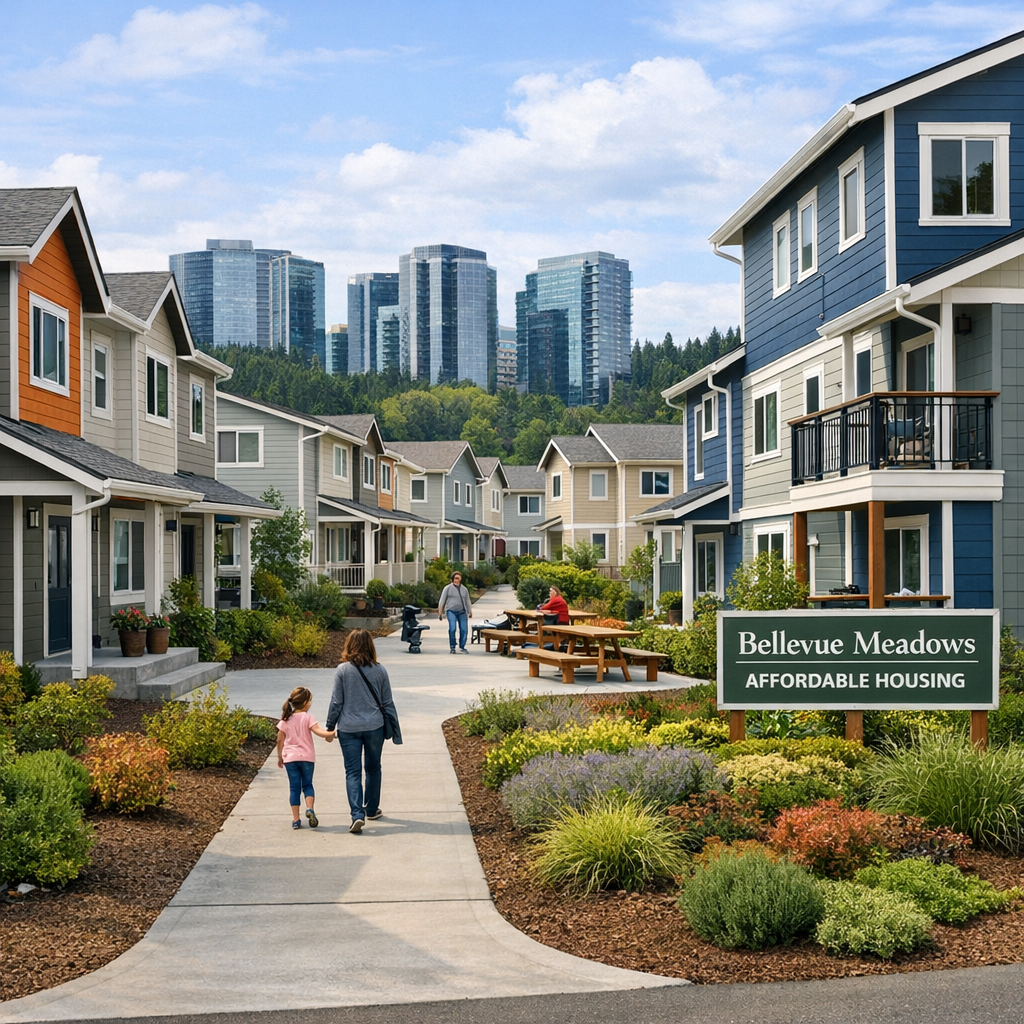
In early 2026, Bellevue City Council advanced a comprehensive Affordable Housing Strategy for 2026-2032 that aims to preserve and build housing affordable for households at different income levels. Among the goals: preserving older multifamily buildings often considered “naturally affordable,” exploring funding for deeply affordable housing, and reducing the time and cost of building new units. These steps matter—but many people say they’re still out of reach for those earning under 50% of the area median income (AMI).
Public feedback revealed that the affordability challenge doesn’t only hit those with low incomes. Middle earners—nurses, office staff, newcomers—feel squeezed too. And seniors wanting to age in place or people needing accessible housing options say they often don’t see solutions that match their realities.
Every story counts
I spoke with a few neighbors who shared bits of their struggle. There’s a young teacher who spends half her income commuting from farther east because housing in Bellevue is beyond her reach. A senior who loves the walkable neighborhood she’s called home for decades but worries rising costs will force her to move away. A family who serves this community—kids, small business, volunteers—yet still can’t find a two-bedroom apartment that’s both affordable and accessible.
What can make a difference
- Preservation of older housing: Protecting naturally affordable homes before they get redeveloped out of reach.
- More affordable units for lowest incomes: Strategies that emphasize support for households under 50% AMI are crucial.
- Simplify development: Reducing red tape, accelerating permitting, and providing incentives when feasible.
- Inclusive design & aging in place: Building homes that meet people’s needs over time—accessibility, connectivity, transportation.
- Center lived experience: Let stories guide decisions—those who are feeling displacement, being priced out, or finding housing unstable.
A Bellevue that holds us all
We talk about growth and opportunity—and we want both. But growth means little if people who serve, teach, heal, sustain us can’t afford to stay. I believe Bellevue can be a place where people from all walks of life feel they belong. A Bellevue where affordability doesn’t come at the cost of community roots.
If you’ve got a story—of housing hope, struggle, or something in between—please share it. Because it’s through our voices, together, that we’ll shape the Bellevue we want.